At Sportball, we believe that every child should have the opportunity to enjoy sports and the vital lessons they’ll learn through it. The journey from that very first class to stepping onto a league is a natural progression. However, instead of early specialization, a multi-sport path builds confident, resilient kids who love being active — now and well into their youth. When kids are ready to specialize, it will benefit them to keep multi-sport in rotation, too.
What Is the Multisport Advantage for Young Athletes?
The multisport advantage refers to the physical, psychological, and social benefits young athletes gain from participating in multiple sports instead of specializing early. Research shows that multi-sport participation improves motor skill development, reduces injury risk, lowers burnout rates, and increases long-term athletic success and lifelong physical activity.
What happens if young athletes don’t embrace a varied athletic approach? Let’s break down the potential downsides of early specialization and explore the multisport advantage for young athletes. Keeping the athletic menu diverse offers benefits.
| Factor | Early Specialization | Multi-Sport Participation |
| Injury Risk | Higher | Lower |
| Burnout Risk | Higher | Lower |
| Skill Diversity | Narrow | Broad |
| Long-Term Retention | Lower | Higher |
Below, we map out a progression that shows how Sportball’s multi-sport classes grow skills and spark confidence.
First Steps & Fundamentals. Age Range 16 months–3 years What It Looks Like:
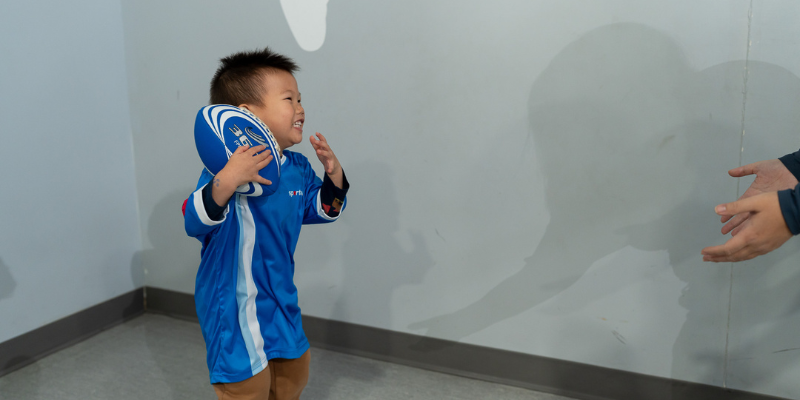
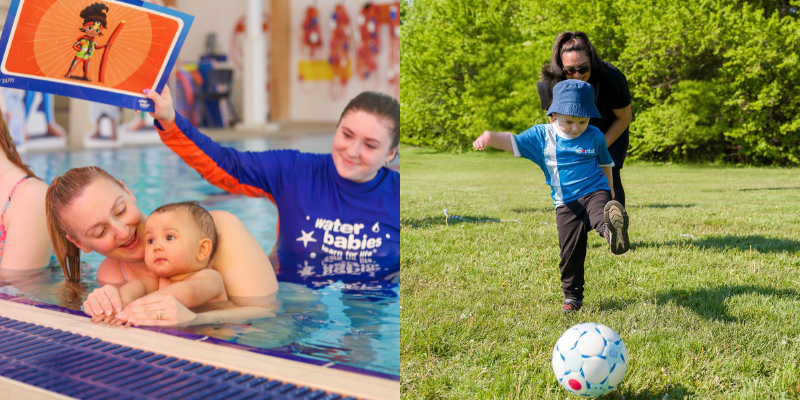
In this phase, your child is experiencing movement for the joy of it. They’re introduced to a variety of fundamental movements: from running to kicking and throwing to jumping. Sports are taught through a playful and supportive environment.
Skill Benchmarks:
- Engages happily in group activities
- Develops gross motor basics (running, stopping, balance)
- Starts to follow simple instructions
This stage is all about building physical literacy, the bedrock of athletic confidence that’s transferable to every sport.
Practicing Independent Movement & Gaining Confidence. Age Range 3–5 years What It Looks Like:
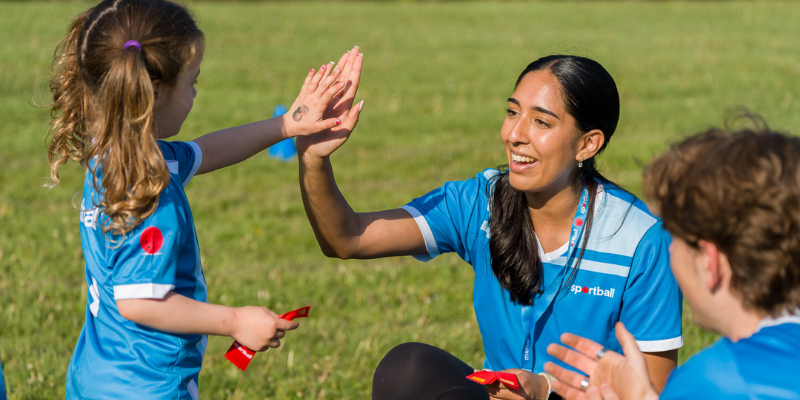
Your little athlete starts recognizing patterns across different sports: how eyes track a ball, how feet work when running and changing direction, how to wait their turn and celebrate others.
Skill Benchmarks
- Improved coordination and balance
- Can follow multi-step instructions
- Beginning sport-specific skills (passing, kicking with intent)
Sport Awareness & Playful Exploration. Age Range 5–12 years What It Looks Like:
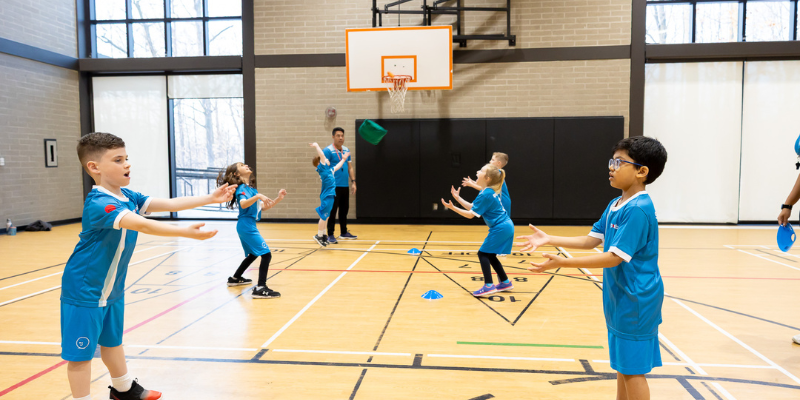
With a solid foundation of general skills in place, kids begin to show preferences, maybe soccer sticks out more than basketball this week, or they absolutely love the way a golf swing feels.
Skill Benchmarks
- Better decision-making during play
- Awareness of teammates and sharing equipment
- Fundamental sport skills emerging across multiple sports
- Can stay focused through a full class
- Plays cooperatively and listens to simple game cues
- Understands cooperation and rotation
- Game awareness (Where should I be? What should I do with the ball?)
- Solid control of sport-specific skills
- Can participate in full games with consistent effort
- Positive communication and sport understanding
This is the transition zone. Kids at this age can start sampling structured team play, like recreational leagues, while continuing multi-sport classes for the physical, social, and behavioural benefits.
Why Keeping Multi-Sport in Rotation Works
Across each stage above, research and experience agree on three big truths:
Broad motor skills=better athletes
Exposing kids to many movement patterns helps them develop strength, balance, coordination, and agility that transfer across sports. Studies from the European Journal of Sport Sciences and the Journal of Athletic Training state that, “most Olympians demonstrate better performance after youth multi-sport engagement.”
Lower risk of injury
Multi-sport programs, like ones at Sportball, are designed with fun first programming across multiple sports. According to research published by the Journal of Athletic Training, sport specialization often requires increased training hours and may predispose young athletes to social isolation, poor academic performance, increased anxiety, greater stress, inadequate sleep, decreased family time, and burnout.
Dodge Dropout
Multi-sport play spreads movement loads and keeps sport fun, as opposed to focusing on one sport for most of the year. Project Play surveyed young kids, asking why they played sports. Winning ranked 48th. Fun? Number one. Multi-sport builds love of play for life. Kids who explore more sports are more likely to stay active because sport doesn’t feel like pressure: it’s just fun.
When Should Young Athletes Specialize?
Can multi-sport athletes still become elite?
Yes, many elite athletes played multiple sports in their youth. Your child can still become an elite athlete without early specialization. Did you know most Olympians didn’t start practicing their main sport until they were 10, and didn’t specialize until 15 years of age? On average, most Olympians spend the first 10 years of their life playing multiple sports, discovering what they enjoy, what they’re good at, and becoming well-rounded athletes.
Starting specialization
At Sportball, our non-competitive multi-sport approach is about confidence, teamwork, and resilience. Our coaching and programming are grounded in child development science, and designed to help every kid find a love of movement for life.
After age 12, your child may be ready for the next step into specialization. Their path from Sportball beginner to confident league player doesn’t happen overnight, and it shouldn’t. It happens through play, exploration, and growing confidence. By keeping multiple sports integrated in that journey, even through specialization, you’re giving your young athlete the best chance to thrive physically, socially, and emotionally on any field they choose later in life.
References
- Aspen Institute. (2019, August 1). Survey: Kids quit most sports by age 11. Project Play. https://projectplay.org/news/kids-quit-most-sports-by-age-11
- Brenner, J. S., LaBotz, M., Sugimoto, D., & Stracciolini, A. (2019). The psychosocial implications of sport specialization in pediatric athletes. Journal of Athletic Training, 54(10), 1021–1029. https://doi.org/10.4085/1062-6050-394-18
- Blake, S. (2025, November 24). More than a ball: How Sportball is nurturing healthy youth development built on confidence and community. USA Today. https://www.usatoday.com/story/special/contributor-content/2025/11/24/more-than-a-ball-how-sportball-is-nurturing-healthy-youth-development-built-on-confidence-and-commun/87449404007/
- Mukhopadhyay, K., LeBlanc, M., Porter, M., & Zhang, Q. (2023). Starting and specialisation ages of elite athletes across Olympic sports: An international cross-sectional study. European Journal of Sport Sciences, 2(5), 9–19. https://eu-opensci.org/index.php/sport/article/view/9100