Jonathan (00:19.758)
We’re here with Jason D’Rocha. Jason, thanks for being here. I really appreciate it. This is one I’ve been looking forward to. You and I met about six months ago. I got to hear what you do at sport ball and instantly fell in love with it wanted to have you on here to tell other people because I think it’s such a great idea. But before we get to that, we’re going to start the same place we start every single week. We want to meet dad. So can you tell us a little bit about your kids, what they play and what it’s like being dad to them?
Coach Jason (00:26.177)
Thanks for having me, Jonathan.
Coach Jason (00:50.091)
Sure, it’s the best job I’ve ever had in my life, safe to say. I’m sure that’s what every dad says, but I have an 11 year old and an eight year old. I’m a girl dad and I love every minute of it. They came up through the sport ball program learning multi-sport and they found their passion is gymnastics. So my girls do performance gymnastics. They’re also huge swimmers, go to the cottage on the weekends in the summertime here. I’m in Toronto, so the weather doesn’t allow us to get up there in the winter, but.
you know, spend summers at the cottage and swimming and gymnastics for the rest of the year.
Jonathan (01:24.558)
Speaking of Toronto, we were actually, this comes out in like a month, but we were gonna record this yesterday, but Jason emailed us, I the first thing in the morning, he’s like, hey, we got a bunch of snow last night and our kids are out, so I’m like, how much snow does it take to cancel school in Toronto? Because here in North Carolina, it takes the threat. And so we were talking about that, like, would you say 40 centimeters?
Coach Jason (01:44.725)
Yeah, 40 centimeters canceled it. I mean, they were closing school boards down that never closed down. I think that the school board that my children are at the last time they closed down was probably a decade ago. So it was a big one.
Jonathan (01:54.595)
Mine closed down in December. And I guarantee you by the time this comes out, think in March, by the time this comes out, I guarantee you we will have at least four or five snow days, but we will maybe have an inch of snow. Maybe total because it just, yeah, that’s just welcome. Welcome to living in the South.
Coach Jason (02:04.661)
Wow. yeah. My kids woke up. Yeah, I was going to say my kids woke up like they won the lottery. Snow day was huge for them. So it was a busy house yesterday and I appreciate you making the accommodation for us to reschedule to today.
Jonathan (02:15.105)
You
Jonathan (02:21.558)
Absolutely. All right, let’s get into this because this is one I want to talk about. The thing that made me want to talk to you was the guiding principle you all have of
using sports to develop humans and not just athletes. I’m a giant believer that youth sports are not primarily about winning individual games. Yes, we want to compete and yes, we’re always going to try to win, but winning individual games is not the primary reason we play these games. The primary purpose of youth sports is helping kids develop all the tools they need to become successful human beings. And we want them to learn that they can do hard things. We want them to learn that they can bounce back after failure. want
Coach Jason (02:34.401)
That’s right.
Jonathan (03:01.548)
them to know how to be a good teammate and how to understand the importance of being active physically. Every kid’s going to play their last game.
usually between 11 and 16, but every kid grows up to be an adult. And if we can use these silly little games to help them learn what they need to do to be successful in life, then ultimately we’ve won regardless of what the scoreboard says at the end of the game. That’s my core message. Everyone listening to this has heard me say that before in your terms, in what you do, how do you view using sport as a training ground for life?
Coach Jason (03:25.931)
Well said. Yes, sir.
Coach Jason (03:39.061)
Great question. Sport is a safe place to do hard things, right? Life has some real consequences in it, you know, but when you’re playing sports, kids can be challenged. They can fail. They can put forth the effort. They can recover. You know, what a wonderful safe place to do it where the stakes are relatively low. You know, I think that every experience that I’ve ever had in real life was supported by some experience that I had playing sports.
So that’s how I would view it.
Jonathan (04:10.605)
Yeah, mean, it’s in the moment, these failures feel gigantic, but looking back as a 39 year old now, none of it mattered. Like none of it, none of it had a long-term negative impact. So there were some memories, but other than that, like I don’t remember as a ton of wins. I don’t remember a of losses.
Coach Jason (04:17.11)
they do.
Coach Jason (04:26.795)
That’s right.
Jonathan (04:36.151)
but I remember the things that happened along the way that helped me learn how to be a human. And we can use like scouts, we can use dance, we can use gymnastics, we can use all these different things. We’re just choosing to use sports because they’re fun.
Coach Jason (04:42.049)
Yeah.
Coach Jason (04:51.617)
Yeah, 100 % correct. You know, I just, I just wrote an article about this on, LinkedIn, you know, growing up, I came from, you know, humble beginnings, my folks were immigrants to this country and they had to work really hard to get a couple of nickels on, and, and so what they registered me for was not organized sports. It was like those life skills types of, so, you know, I had to go learn how to swim and being in Canada, you have to learn how to skate.
know, defend yourself. took some karate classes, but organized sports wasn’t a thing for me back then. you know, my uncle was really my first coach that I’ve ever had. And the one thing that he focused on was just the fun of the game, like develop a passion for it. You know, he talked trash, the good kind that, you know, you can know the difference between being insulted and having fun and not taking yourself too seriously. you know, those positive associations with sport at that young age allowed me to have the confidence to try and to fail.
And I think that serves you for the rest of your life.
Jonathan (05:49.058)
We had on, my friend, Eric Williams a little while back and he and I, we, talk a lot about this, but I think he’s 42, 43 at this point. He coaches his son’s U12 U13 baseball team. And he says right now his sole goal is helping his son love it so much that when he grows out of baseball and switches over to old man softball that Eric can still be playing and get to play with his son because both of them love it so much.
Coach Jason (06:00.907)
Hmm.
Coach Jason (06:17.287)
I love that. It’s rare.
Jonathan (06:19.349)
Isn’t that why I might not? I might not play adult soccer when my kids get there, but I want my kids to love the game so much that if they go to college, they’re wanting to play intramurals. If they if when they have kids, they love their experience so much that they want to coach their kids growing up like that’s the goal.
Coach Jason (06:24.971)
Yeah.
Yeah.
Coach Jason (06:36.161)
That’s the goal. That is it. And I mean, I have a lot of friends who don’t have a lot of positive associations with sport that played, you know, when they were younger and they are, they don’t want to go throw the football around or, or, or shoot some baskets or anything like that. You know, there was not, you know, it’s funny, like the impact that happens at such a young age, critical age really can have an impact on you as an adult, which you’re not even conscious of. And, and I feel for those folks and it makes me, you know, in my profession as a dad,
Jonathan (06:42.251)
Mm-hmm.
Coach Jason (07:05.248)
It makes me very conscious of making sure my kids understand the value of sports, but also to have some really positive associations with it. And really it all starts with just having fun.
Jonathan (07:14.207)
I have this theory that one of the reason it’s so hard to get coaches in today’s youth sports world is because so many adults didn’t have good coaches growing up. Yes. Like dealing with parents sucks. Like that’s the worst part of coaching in youth sports. Yes. But what I have seen is so many of the better youth sports coaches.
are people who they don’t have the time either. They’re exhausted at the end of the day, but they had a good coach growing up and they want to give that experience to the next generation of kids. And I just think about like if we can create a great environment for our kids. One of the things I’m writing, I wrote in the healthy sports parents book that I’m working on. actually by this point, I’ve probably told people the title, so it’s called youth sports aren’t about winning. but one of the things I wrote in that is when we signed our kids up,
Coach Jason (07:46.177)
Yeah.
Jonathan (08:09.461)
for sports for the first time, no one gave us a guide for how to do this. But if we get it right, then our kids won’t need a guide because they’ll have our example. And I just picture what we could do for our grandkids if we get this right and set the right standard and the right environment for our kids today.
Coach Jason (08:13.376)
Hmm.
Coach Jason (08:19.969)
That’s exactly right.
Coach Jason (08:31.263)
Totally. think a lot of parents go in with the expectation around, you know, how well does this coach understand that sport and the skills associated with that sport and have they played at a competitive level and what have they achieved in that sport? Less so on, I wonder how this coach is going to make my son or daughter feel. I wonder whether or not they’re going to make them feel welcome and feel confident and give them the opportunity to succeed and build that trust. Cause those are the elements. That’s what we look for when we hire a coach at, you know, at sport ball.
The first thing that we’re thinking about is not their sports background. Although we want them to be passionate about sports and physical play, we want to know how well they can connect with a child. Do they make that child feel welcome in a space where they’re experiencing things for the very first time? Being around other peers, being with a coach maybe for the first time, other parents watching them. There’s pressures that obviously come from those types of social experiences.
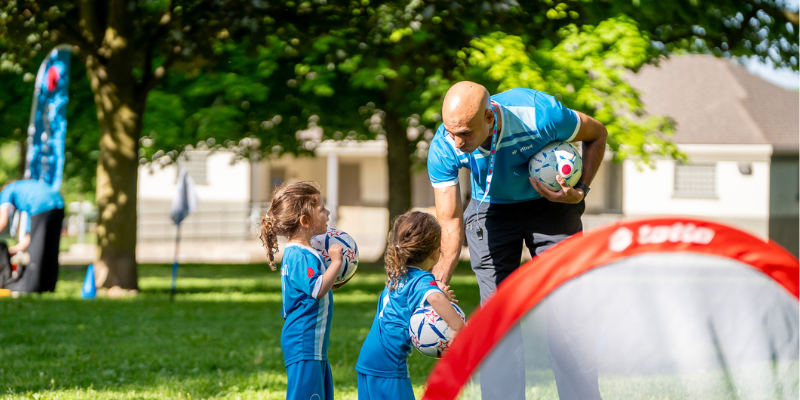
We want to know that that coach has the ability to navigate that. And something as simple as, you know, how, what their behavior is when they first meet a child. You know, when you’re a coach and you’re working with kids, you’re usually standing over them. You know, does the coach get down to a child’s level? Do they smile, which is the most disarming thing that you can do when you first meet a child? You know, do you, do you welcome them? Do you use their name? Do you look them in their eye and not just the parent in the eye? All those little things make me as a parent feel like my child is safe to be in your presence.
and they trust me a little bit more because they know I’m only going to bring them around people that have their best interests at heart.
Jonathan (10:02.121)
I have this, I will do one of two things. Anytime I’m at practice, if I’m coaching, if I see a kid walking in the field, I will yell at them from the park. If they’re in the park, I’ll yell their name at them just to show that I’m so excited. They’ll see they’re there. Or if I, if I can’t get to them before they get there and they’re like, what’s up dude? I say just like that. Like the funniest part is the boys love that the girls, when they first started, they’re like, dude, I’m like, dude, gender neutral, get past it. Let’s go. But it’s just like, I kind of make this sarcastic fun environment and
Coach Jason (10:13.269)
Love that.
Coach Jason (10:18.267)
Hahaha.
Coach Jason (10:26.997)
That’s right.
Jonathan (10:32.141)
Every kid’s different, but if you can get to a place with kids where you can joke around with each other and you can be sarcastic, then you know you’ve gotten to the point where they feel welcome and loved and accepted because they’ll give it back just as much as they’ll take it. But they only will do that if they know it’s out of love, not out of judgment or snarkiness.
Coach Jason (10:33.259)
that human connection.
Coach Jason (10:49.921)
That’s right.
Coach Jason (10:54.71)
Yeah.
That’s right. And they feel safe, right? Like I can attempt this and I can fail. That guy’s not gonna judge me, right? That coach is gonna have my back. That coach is gonna help me to figure this one out. All of those things come from this prerequisite skill of making a child feel comfortable in their skin.
Jonathan (11:16.909)
I said this with, um, it’s an episode that comes out in a couple of weeks with Dr. Caitlin Okamoto, Okamoto from the U S soccer foundation. And what I love about sport is that it brings together people from every background. And it’s one of the last places in our society that does that. And when you care for kids, like I coach you soccer.
I am Ted Lasso. I know enough soccer to know what I’m doing. I know some tactics. I can’t teach footwork for crap. I can teach you where to go, what to do. I can teach you big picture, but I’m gonna encourage you. That’s just the way I coach. There are people who can coach the game of soccer a thousand times better than I can. But I have a neighbor who has diametrically opposed political beliefs from me.
who we’ve had hard conversations about those beliefs with each other. And we see the world differently, but she loves me coaching her son because of the way I care for him. And I think about youth sports on the sidelines from coaches, from parents, from like all the different aspects of this. like, can we be the people who represent the humanity?
Coach Jason (12:25.493)
Yeah.
Jonathan (12:43.217)
of these kids who we might disagree with every other parent on our sidelines on a thousand different things in our lives. But can we treat these kids so well that that person over there who has a diametrically opposed belief about religion, politics, whatever, they want to be around me because I treat their kids so well. And as a coach, can I treat every kid that way?
Coach Jason (12:49.706)
Sure.
Coach Jason (13:07.359)
Yes.
Jonathan (13:12.957)
So that even if once we leave this parking lot, we might not get along. But while we’re here in this gym, in this rink, on this field, you know, I’m going to love your kid. So youth sports can be that bridge for us to build a relationship together.
Coach Jason (13:24.929)
Yeah.
Coach Jason (13:30.047)
Yeah, well said. I mean, not even when you be parents at the rig. mean, some of my own close personal friends and I see the world differently. My wife and I sometimes see the world differently. But when it comes to the kids, you’re absolutely right. You have to agree on a certain set of principles and then you all have to work together to create that environment for that child. know, children, let’s say children, they either bother your calm or they borrow your calm or they borrow your chaos.
you and they can figure that out very quickly by the way that you react, you know. So you want to be that stable force in their life. You want to be able to say that regardless of what the outcome is, here’s what, here’s kind of the ground rules, here’s the rules of engagement and we’re all on the same page. And not to say that you’re not going to come to, you you’re not going to butt heads or come to a disagreement on an outcome or even sometimes even the process, but you have to show up.
feeling like I can come to the table and I can have a conversation with even the people that I disagree with because at the end of the day, kids are always watching. Those kids that we’re trying to mentor are always watching us.
Jonathan (14:36.909)
And I did a reel the other day where I said that the way we talk about our kids teammates is the way our kids are going to think other parents talk about them. And the way that we talk about their coaches is how they’re going to think other people talk about them when they’re in a leadership position. So the, the, I said that like 75 seconds cause it had to be concise on a reel, but
The idea behind that is we can disagree on ideas or actions while still respecting the humanity behind it. And we’re using sports where there’s going to be disagreements. You might not like the playing time. You might not like the tactic. Like you might not like the formation on playing in soccer because it doesn’t fit your kid the best that’s for them, but it fits the whole team. Like we’re going to have disagreements, but can we have disagreements while honoring the humanity of the person? And can we have disagreements in a way that
Coach Jason (15:05.909)
Yeah.
Coach Jason (15:09.281)
That’s right.
Coach Jason (15:20.416)
Yeah.
Coach Jason (15:23.777)
That’s right.
Jonathan (15:26.034)
leads our kid in a way for how to model for them how we respectfully disagree with others.
Coach Jason (15:32.613)
You’re 100 % correct. You know, I always, you know, I always laugh because parents, want, we want all these positive experiences for our kids. We want the outcome, but we sometimes forget that children learn what they live and you have to model the types of behaviors if you want those types of outcomes. You can’t have one without the other. And so I think you put it, you put it very well. I think that we all have a responsibility to conduct ourselves.
in the same way. You can’t you can’t say you know do as I say but not as I do. No no they got it you know you have you have to do as you say. Starts there.
Jonathan (16:12.407)
you have so much more is caught than taught. And that’s just one of the things that it’s such a cheesy saying. It’s a cliche, but it’s a cliche because it’s true. All right. I want to switch to sport ball for a second because what I’m about to tell you is one of my favorite things I’ve ever told anybody. was insanely skeptical of sport ball when I was first introduced to it. And like, yeah, I
Coach Jason (16:18.987)
That’s right. That’s exactly right.
Coach Jason (16:24.694)
Sure.
Coach Jason (16:31.947)
Most people are.
Jonathan (16:35.037)
I went on your website. got a DM from the social directors and I, Hey, we’d love to tell you more about this because I’ve been talking about rec league and I go on the website. I’m like, I don’t know about this. Like you guys have classes for kids that are 16 months old. And like, like for me, with the systems that we have, I was skeptical because it felt like a money grab because
Coach Jason (16:48.321)
16 months.
Coach Jason (16:56.257)
Yeah.
Jonathan (16:57.579)
When I see any program for kids under the age of like four or five, I immediately think money grab. And for reference, like the reason for that is the American Association of Pediatrics doesn’t suggest kids start playing team sports until the age of six.
Coach Jason (17:03.146)
Hmm.
Coach Jason (17:11.382)
Yeah.
Jonathan (17:12.159)
So when you and I talked, I asked you directly, and I told you, I was skeptical of it. And your answer won me over. So for anyone listening, who’s wondering, when do I start my kids in sports? If they have younger ones, what do I do? Can you tell us why sport ball starts their classes so young and the approach that you use for those young kids? And when I’m talking about young kids, I’m talking like pre-elementary age.
Coach Jason (17:29.771)
Yeah.
Coach Jason (17:35.969)
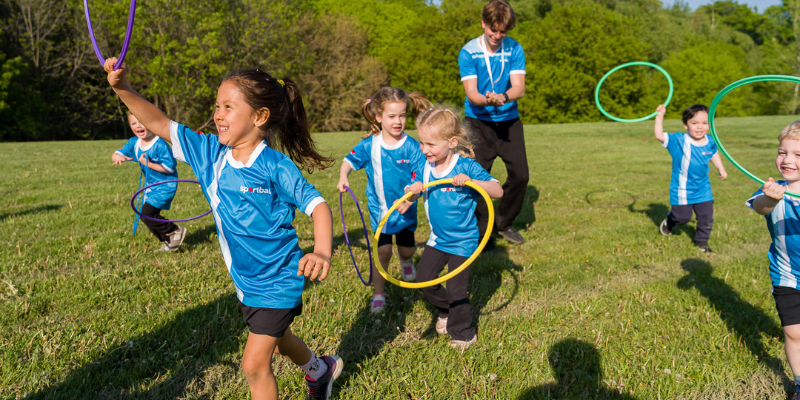
That’s right. Yeah, so I think that the best way for me to put this, it’s not so much about when they start, it’s how they start. And I think that’s what we specialize in. And we can start them in the most incredible way, as young as 16 months. we actually see, you we started when this was 30 years that sport ball has been in the game. And we started with kids as young as four and five years old. And then we thought to ourselves, what is actually taking place here? Are we teaching kids sports skills so they can go play pickup?
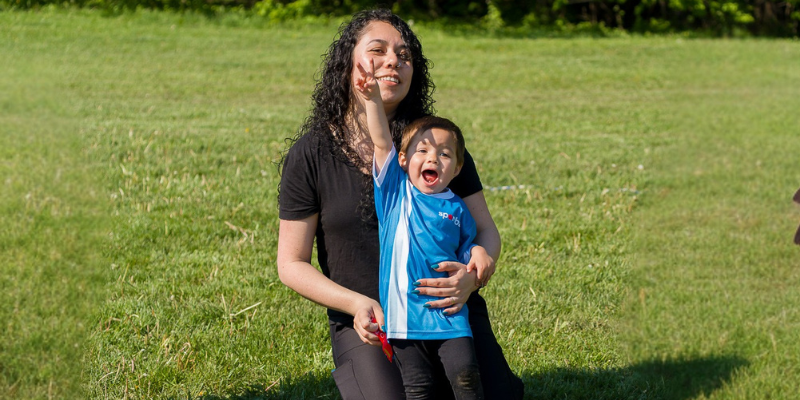
basketball or go on the, you know, hit the links? No. You know, what we’re doing is we are teaching children physical literacy, social literacy. We’re using sport as a conduit to teach to gross motor, social and physical development. That’s ultimately what we’re doing. And we’re doing it in the most positive way possible. We’re building the relationship with parent and child in a safe environment. And so what age would you want to expose a child to that? So for us, we went from four to five. We started at three. Then we went down to three.
And we thought that went very well. we saw parents came in and said, listen, I have a two-year-old at home who has so much energy and loves to kick a ball and would just love to be out here with me. I said, all right, well, let’s try a parent and child class that starts as young as two. And we tested the waters with it. And a lot of what we did was trial and error because you can’t have all the answers right out of the gates, especially when you’re working with kids at that age.
You also have to make sure that not only do you have a curriculum that’s appropriate, but you have to train your coaches with the right class management strategy so that they can engage a child at that stage and ensure that it’s developmentally appropriate. And what we thought was, you know, if we start as young as 16 months and we introduced the thing, I thought so too. I thought so too. And you know what, as a coach, I remember the first time the founder of the sport ball, her name is Carmela Gelgore.
Jonathan (19:11.499)
Which is nuts, Jason, which is nuts.
Coach Jason (19:22.849)
She said to me, Jay, we’re actually gonna try a program for children 16 months. I said, well, I’m not going in there to do that. I don’t know what that looks like. And I remember sitting on the sidelines and she said, so what’s developmentally appropriate at this age? She said, stories, puppets, bubbles, nursery rhymes. We’re gonna incorporate that into the sport ball class. And I can’t sing for the life of me. I was young, I was in my twenties. And I remember sitting there shaking, shaking, watching Carmela out with the puppets and the bubbles and the stories.
Jonathan (19:28.044)
You
Coach Jason (19:50.625)
But what she did was exactly what we do in sports is she gave them activities that they enjoyed. She gave them activities that they can succeed at and she won their trust. And so all of a sudden she also won the parents trust. Wow. This, this coach, this sports coach did some stories, some bubbles, some songs. My kid is, my child is listening. They’re focused. They’re engaged. Now look at this. They just brought out a buckle, a bucket of balls.
And all they’ve asked all the kids to is pick up some balls and put it in the bucket. You win the kids successfully. Wonderful. Now you give them a soccer ball. You put it on a launch pad. We call it a pile on a launch pad. We say to the kids, we’re going to blast it into outer space. And all of a sudden we say, parents, you’re going to hold out your two fingers and kids are going to hold their hands and we’re going to walk and give it a big kick. And we use very simple language. And all of a sudden the kids feel like, well, the coach.
They love the coach. They were singing, they were doing bubbles, they were doing stories. Now they put a ball down, I can kick it. And all of a sudden we have these kids that are now progressing from what they’re comfortable with to trying new things. And all of a sudden we’re now teaching them the basics of sports and now developing their physical literacy. And by the way, what comes with that? Waiting for their turn, listening to someone give instruction, being out there with their peers, building up a relationship with mom and dad who gives them a high five or a hug when they succeed.
At what age would you want to have a child experience all those things? For me, as young as possible. And we start, like I said, at 16 months. And then once we get to three, we can step away from the songs, the bubbles, and the stories. And now we can get into the sports skills development. But you have to do it in a way that’s developmentally appropriate or you’re going to lose kids. So as I said, you use sports as a conduit to teach developmentally appropriate skills. And all of a sudden, you can build these really wonderful experiences for children.
Jonathan (21:41.23)
Staying in that age group for just a minute. I’m going to get a text for saying this and I’m just, I’m just too, I’m going to set my clock two months from now. I’m going to get a text for saying this. My college roommate’s son made the five U T ball all-stars this past summer. And there was a state tournament for five U T ball. And I remember when he posted on Instagram, I saw it and I’m just like, I’m so glad they had a great time, but that’s ridiculous. So, so.
Coach Jason (21:57.985)
Hmm.
Jonathan (22:11.233)
I’m just waiting for the text. Like it’s going to come. but I mean, I know him and so I know he was approaching it in the right way and we’ve talked about it, but not all of us are in situations where young kids are with the same environment you’re talking about. So when we’re talking, let’s bump the age up a little bit. say grade three and below, like what are we looking for at that grade three and below? Like,
Does the competition even really matter at that point? are we, what, what, are we focused on? Because a lot of us, that’s the ages where our first kid starts playing sports. Their first introduction to being a sports parent. And that’s when all those insecurities that we’ve had buried down for so long start popping up and we start having these feelings. We don’t know what we’re doing, dealing with. So those younger age, let’s say you eight and below third grade and below.
Coach Jason (22:43.509)
That’s a great question.
Coach Jason (22:51.627)
Yeah.
Coach Jason (23:03.414)
Yeah.
Jonathan (23:10.667)
What are we focusing on? What’s the point?
Coach Jason (23:12.607)
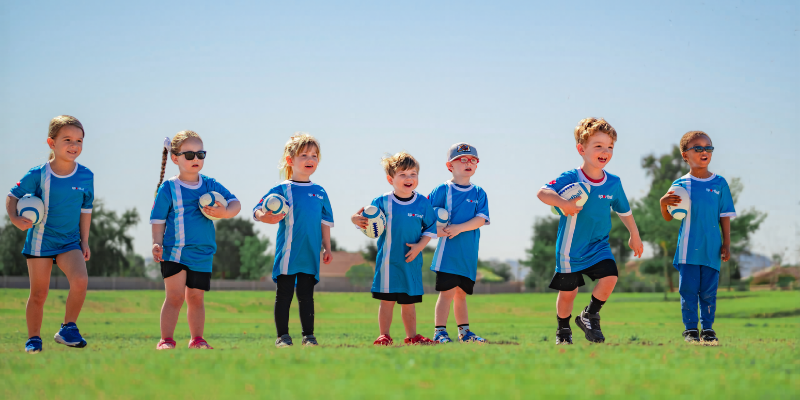
Yeah, great question. you know, again, this is coming from sportball. So sportball is a non-competitive sports instruction company from children from 16 months all the way to 12 years old. And our focus is to develop physical literacy and social skills. So yeah, please.
Jonathan (23:25.453)
Can interrupt you? I wanna take your background even further than sport ball. Should there be competitive levels at that age?
Coach Jason (23:33.505)
Well, that’s a great, yeah, that, that, think that’s where I was getting to. So for us, it’s non-competitive and you move them to semi, semi-competitive, and then you can introduce them to competition. It’s like, it’s like anything, right? If you want to, you know, you want to fly, you have to first learn to walk and run, you know, you can’t fly into flying. And I think that’s the same way that we approach sport ball. We, we want to make sure that kids have the foundation, which starts really with confidence in themselves, competence in themselves, some body awareness.
trust in a mentor or a coach. And then once they get to that, and again, we move from parent participation classes to drop off classes. So at three years old, three to four, when they start to go to school by themselves, we then allow them to come to sport ball by themselves. Parents stay out of the gym and what do they learn there? So they’ve gone from dependent play with mom or dad to independent play with their peers. But the focus there is still not me versus you, team versus team, it’s skill development.
How do I dribble a soccer ball? How do I dribble a basketball? How do I throw a baseball? How do I catch a baseball? How do I run the bases? All of those things don’t require it to be in a game situation where there’s a win and lose outcome. So you develop the competence around those skill competencies around sport and it’s still non-competitive. But then you can start to introduce them to some controlled competition. it’s like, for example, we’ll do a race in a sport ball class and the kids won’t race against each other. They’re actually racing against the coach.
So the coach will lose in week one and lose in week two, but the coach is getting better. And eventually by the end of the season, the coach beats the kids, but he also gives the kids to learn how to deal with winning and losing. The words to express themselves and how they feel. Put a thumb up and say, I tried my best. And point a thumb at the coach that you’re not happy that just beat you and say, good race coach. So we actually role play and we give the kids the pro social language that they need to be successful. And then once you get to that five, six, seven,
we start to introduce them to more competitive activities. So we’ll play a soccer game and maybe we’ll throw two or three soccer balls in the game. So more kids get a foot on the ball, more kids get a chance to score a goal and then we’ll remove a ball and then we’ll remove a ball and then before you know it, the kids are actually in a real soccer game but they have no idea that they have just progressed to get to that experience and they have all the social skills and physical skills to feel successful there.
Jonathan (25:53.773)
I want to nerd out on this for a second because, and I want to take that social skill concept and nerd out.
About a year ago, I wrote an article for the 74 million and the 74 million is a nonprofit news organization that covers the American education system. In the article, I made the argument that youth sports is the most overlooked classroom in every school district in America. So many of us view youth sports as just a physical outlet for kids when in reality it’s sports offer like this giant depth of learning and development and the social piece of it you just talked about. And I think we rush to competitive.
before kids have the social awareness and maturity to handle wins and losses at that scale. playing on a team, I think kids can understand wins and losses when it’s one-on-one pretty young. But when you’re a part of a team and you’re having to deal with teammates and the social skills it takes to have a kid who’s better than you, have a kid who’s worse than you, that takes some maturity to understand. So can you talk to us about…
Coach Jason (26:54.676)
Absolutely.
Jonathan (26:59.095)
how sports can, maybe even should be, used as a social emotional classroom, just as much as a physical learning device.
Coach Jason (27:10.281)
Yeah, I think sports are, it’s already a classroom, right? I think that when you’re in any sports environment, you you’re talking about coping with winning and losing, teamwork, waiting for patience, waiting for your turn, turn taking, problem solving. You know, these are all incredible ways where children are going to learn skills that are transferable to the
to the school setting, to the dinner room table, downstairs in the basement or in the back bedroom or in the backyard with your brother or your sister, how to self-regulate, how to be aware of yourself, your confidence, how my conduct has an impact on somebody else. These are all lessons that they can get from a sports environment. And what a really great place because the kids have so much fun. There’s so much benefit that comes from it developing a great sense of self, a positive body image.
Developing the endurance, the strength, the hand-eye coordination, the timing. So all of these incredible upgrades happen while they’re developing socially amongst for themselves and with their peers. So that when there is a situation in the classroom that’s not on the sports field, they’ll be able to have that lesson, which is like, I saw this play out on the sports field. I had this situation that happened in the soccer game last week. I’m not going to make that same mistake. Or this is how I cheered my teammate up. I’m going to do the same thing for my friend in my classroom.
You know, it is such a profound experience for children because they don’t even realize that learning is taking place. It’s like that muscle they’re developing cognitively that can apply to every relationship that they have in their life, even off the sports field.
Jonathan (28:55.68)
One of my favorite pastors is a guy I used to work with. He’s a pastor in Chattanooga, Tennessee now. In every one of his sermons, he gets to a point in the sermon where he puts on the screen, it just says, what? Coach J, I agree with you. I agree with what you’re saying. So what? I’m in an environment where the program I’m a part of…
Coach Jason (29:06.657)
Hmm.
Jonathan (29:16.864)
doesn’t value that the same way that you value. I get that sports are a social emotional development tool. I’m tracking with every single thing you said, but the other parents on my team and the administrators of the club, I’m a part of they’re so results based that they don’t even do this. So what does it look like to believe with what you’re saying while existing in systems that push against that? How do we do that?
Coach Jason (29:45.921)
It’s a fair point because a lot of those systems reward outcome versus process. And I think as adults, it starts with us. You have to decide what matters more, the trophy or the character. And you have to structure the system. You can’t wait for the fallout to happen. You can’t wait for kids to burn out and say, I don’t want to play sports anymore or have parents fighting on the sidelines and coaching from the sidelines.
and laying into the kids and making the priority something other than having fun and showing up and giving it your best effort. We are so outcome driven. And if you think about it, what do you say when you give an encouraging advice to anybody that’s in a difficult situation? You say to them, focus on what you can control, not what you can’t control. Well, as adults, what is it that we can control? Well, we can control the systems and the regulations and the rule book.
playbook before the games even played. So I think we have to come together and really decide how do we want our children to walk away with in terms of this experience. I think that’s the ultimate question we need to ask ourselves in any sports experience. I played very competitive basketball and volleyball growing up. I used to sit in the dark by myself when I lost the game. I was a sore loser. And there’s nothing wrong with that. think that there’s
Jonathan (31:09.591)
I was gonna say there’s nothing wrong with feeling bad about a lot like that’s a normal. We want our kids to be passionate enough that they feel after a loss.
Coach Jason (31:12.056)
Not at all.
Coach Jason (31:19.192)
100%. And I think that helped to drive me to achieve lots of great things in my life. So don’t rob children of feeling that way. In fact, I would reward the kids for feeling that way. That means they’ve tried their very, very best. But as adults, we have to provide the stability. We’ve been down this road before. We need to be that rock.
that regardless of what’s happening around them, they can come to us and it’s like, wow, that emotional stability, I know I can get that from my coach. I know that I can get that from my parents. So even when I’m waving all over the place through a loss and a win, I have that person that can kind of make sure that I can center myself from here, ground myself from here, and then carve a path forward. And I think that’s what we need to be as coaches and as any kind of sports organization. We need to be the grounding force for kids.
Jonathan (32:08.821)
And as parents on the sidelines, like…
Jonathan (32:14.899)
It’s not easy to be that because these are our babies out on those fields and we are so emotionally invested in their success. And that’s not a bad thing. Like I talk all the time about.
Coach Jason (32:19.521)
Yeah.
Coach Jason (32:24.801)
Yeah.
Jonathan (32:29.461)
What’s at the core of so much of these issues in youth sports is this idea of self-love and self-glory. Self-love being our desire to be liked, self-glory being our desire for other people to think we’re good at what we do. So we want others to like us, we want others to think that we are good at being a parent. And so that’s okay, but when we start getting that fulfillment out of our kids’ results,
Coach Jason (32:35.041)
Mmm.
Coach Jason (32:52.939)
Yeah.
Jonathan (32:54.631)
then it goes to a place that it shouldn’t. So it’s like, it just takes us re-centering ourselves and being aware that that’s there so that we can show up in a better way.
Coach Jason (32:59.841)
That’s right.
Coach Jason (33:05.269)
Yeah, well said. also go easy on yourself, right? I’m not the perfect parent. I’ve been doing this for 20 years. I’ve been working with kids for 20 years. I obviously have my own. I fail all the time, all the time. But I think that there’s no such thing as a perfect parent. What you want to be is a consistent parent. It’s like working out. I try my best to work out every day, but there’s going to be one of those days where I just don’t feel like getting out of bed. I’m going to have those hard moments. And sometimes it’s okay.
Jonathan (33:16.706)
Haha.
Coach Jason (33:33.419)
but I try my best to show up each and every day, because we know that discipline and consistency leads to the outcome that we all long for, that we all complain about and want and fight for. But all of that, in order to achieve those things, it’s done in the quiet of consistency and discipline. And I think that’s what we need to be for our children.
Jonathan (33:53.837)
All right, last two questions before we get you out of here. These are some of my favorite questions to ask every single week. What have I not asked you about that you think parents need to know the answer to?
Coach Jason (33:55.819)
Sure. Sure.
Coach Jason (34:04.577)
What have you not asked me about that I, okay, so I think the one is, I mentioned this a little bit earlier is what do you want your child to get out of any experience that they’re having? And I think that should really guide how you are a coach or a mentor or some form of stability for them in that moment. So if I, for example, sign my children up for gymnastics, what do I want to have my kids get out of that experience? For some of us, want my kids shows that she has a talent.
she wants to do this competitively, I am going to encourage her to do this competitively. And that means my expectations goes up. I’m going to push her harder. I’m going to make sure she’s doing what she needs to do. And if she makes a commitment, she better see it through. But that’s what I set those expectations with my child. If I just want my child to get in shape and to just be in a space where she can maybe make some friends and to have a positive self image, then that’s it.
And if she doesn’t want to go into competition and even though she has the talent, that’s not something that she feels like she wants to do, well then I’m going to respect that as well. I am going to be really clear about what my kids are going to get out of this experience. And that’s going to govern everything, not just my, even my interactions with them, but my, way I interact with the coaches, the way I interact with other parents at the, I am going to govern it based on what I want my children to get out of this experience. And I’m not going to judge anybody else.
Jonathan (35:28.812)
I love that last thing. We had a lot of parents listening to this who don’t have a clue what they’re doing. They’re just walking through this. They have a kid who loves this sport. They want to play and they want to. They want to support their kid as well as possible. How would you encourage that parent this week as they walk through all the stress that comes with you sports?
Coach Jason (35:48.233)
So this is what I do on a personal level. I tell my kids that daddy’s also figuring this out too. I don’t have all the answers and I want to be on this journey with, and I think I am transparent with my girls. Now they’re 11 and eight, they’re a little bit older, so I can have these conversations with them. I think you’re having that conversation with yourself until they can understand it. So I had a lot of self-talk, which is like, go easy Jay, you’re figuring this out. There’s no perfect answer here.
you know, just put one foot in front of the other. But once my kids got older, and this comes to everything, this even comes to, you know, discipline and consequences and, you know, I sometimes don’t choose the right words. I don’t provide the right emotion. I think it’s important to acknowledge that to kids. Kids are a lot smarter than we give them credit for. And I think saying to them like, you know, how does this feel to you? You know, how do you want to move forward with this? And this is kind of what I’m thinking. And you almost try to make it.
a team effort, you know, no pun intended, but that’s the way I feel like this needs to be. And when you screw up, I always say to my, I’ll wake up the next day and I’ll say, you know, daddy, daddy doesn’t regret what I said, but I regret how I said it. And daddy could have been more calm or I could have been more open to what you were trying to say. And I’m sorry. And tomorrow I’m going to try to be better. And I give you the chance to also call daddy on it. So if you think that I can be better, you can let me know.
And that has led to the most amazing relationship that I could ever imagine with my children. To the point, Jonathan, when my dad comes and sees me with my children, he says, well, where the heck was this when I was raising you? You know, who thought about raising kids like that? Acknowledging when you mess up to your kids. He’s like, man, what a novel idea. And I’m so glad, but you know, each generation hopefully evolves and gets a little bit better and.
You know, I’m still learning, like I said, but that’s my biggest takeaway and that’s what I would impart to all the parents listening.
Jonathan (37:44.526)
Coach Jason, thanks for being with us. really appreciate it today.
Coach Jason (37:46.943)
Yes, sir. Thank you, Jonathan. Thanks for having me.
– Jonathan Carone, Healthy Sports Parent Podcast
Link to podcast: https://open.spotify.com/episode/0RqHPIadOYT84xHtH90wLy?si=niHhjCUFToiMK-tvtsmBbA
Follow Healthy Sports Parents on social: / healthysportsparents / healthysportsparents / healthysportsparents