When it comes to enrolling your child in soccer, not all programs are created equal.
Many traditional kids’ soccer programs jump straight into gameplay—tiny teams, scrimmages, and loosely organized chaos. While it may look like “real soccer,” the truth is that most young children simply aren’t developmentally ready for that experience yet.
At Sportball, we take a fundamentally different approach—one rooted in childhood development, physical literacy, and a love of play.
Here’s what sets Sportball soccer apart.
1. We Build Skills Before Game Play
Soccer may seem simple—kick the ball and score a goal—but for young children, it’s actually incredibly complex.
To successfully play a game of soccer, kids need:
- Coordination to control and direct the ball
- Stamina to run and stay engaged
- Cognitive skills to understand rules and positioning
- Social-emotional skills to cooperate with teammates and handle winning and losing
Many programs skip this foundation and place kids as young as 3 or 4 directly into games they aren’t ready for.
At Sportball, we slow things down—on purpose.
Our soccer programs focus on developing fundamental skills first, like dribbling, passing, and trapping, in a way that matches each child’s stage of development. (Sportball)
This builds confidence, competence, and a much stronger long-term relationship with sport.
2. Our Coaches Are Trained in Childhood Development
A great kids’ soccer experience isn’t just about the sport—it’s about how it’s taught.
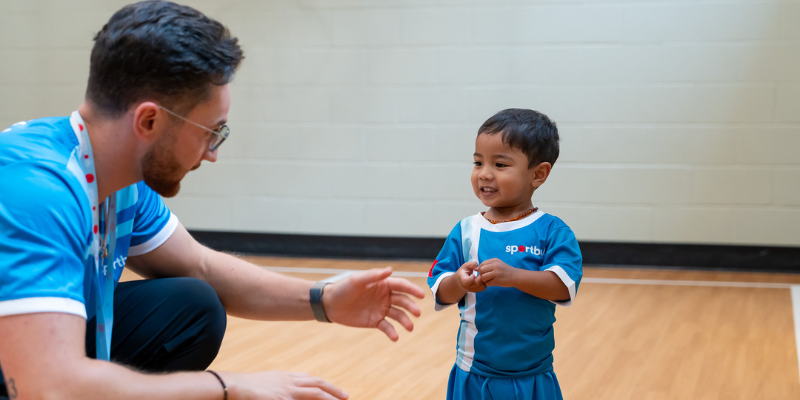
That’s why Sportball coaches are trained using a “coaching with purpose” approach grounded in childhood development research.
Young children don’t learn best through drills or rigid instruction. Research shows they learn through active play, exploration, and repetition. (Sportball)
Our coaches are trained to:
- Teach age-appropriate skills
- Adapt activities to developmental stages
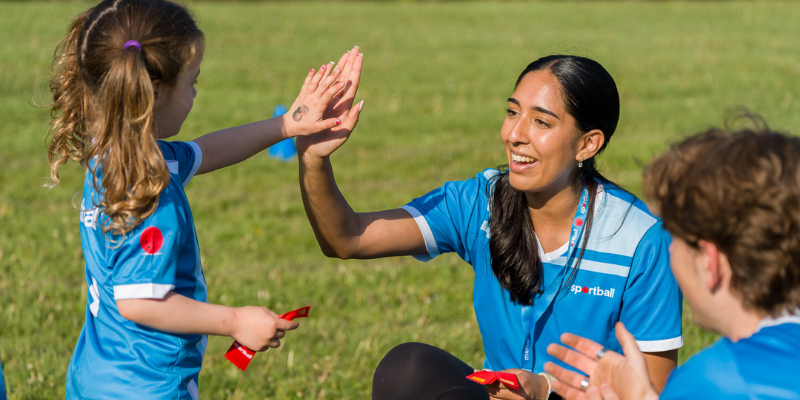
- Build confidence through positive reinforcement
- Create an environment where every child feels successful
This isn’t just coaching—it’s intentional child development through sport.
3. Play-Based Games (Not Pressure-Filled Matches)
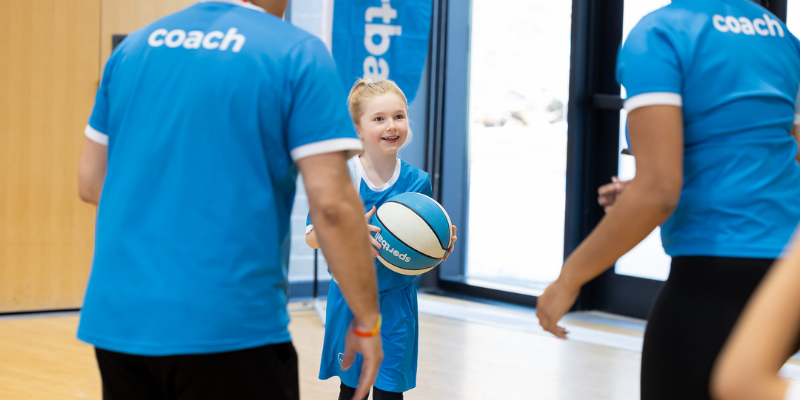
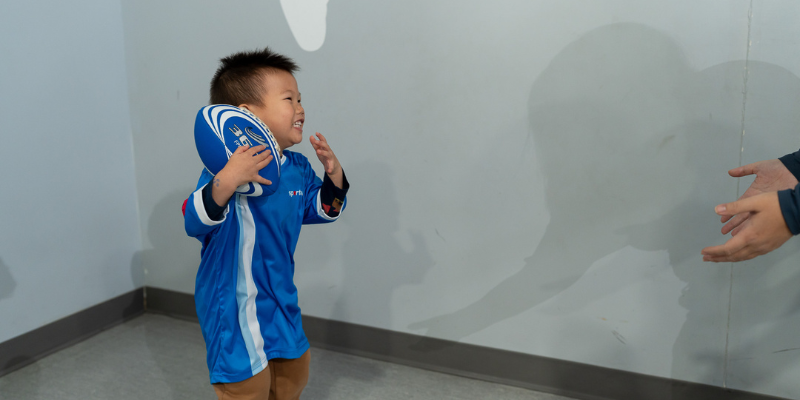
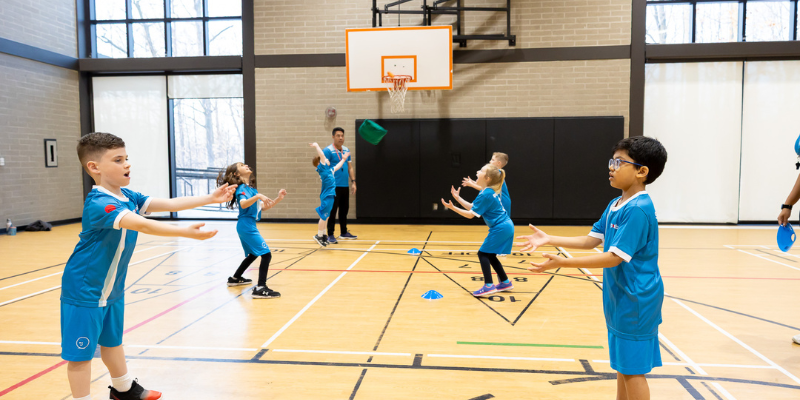
Instead of throwing kids into formal games too early, Sportball uses play-based learning to teach soccer.
That might look like:
- “Silly soccer” with multiple balls
- Coaches vs. kids games
- Creative challenges that build skills without pressure
These modified game environments allow kids to practice real skills in a fun, low-stakes setting.
Why does this matter?
Because for young children:
- Fun drives engagement
- Engagement drives learning
- Learning builds confidence
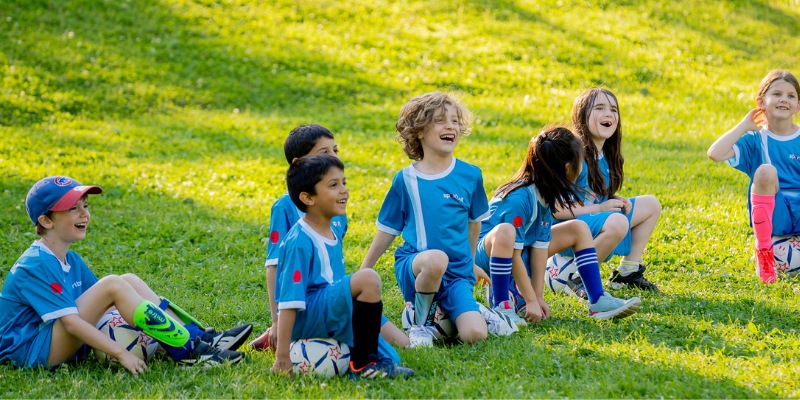
Sportball’s play-based approach ensures kids stay active, excited, and eager to come back each week.
4. A Multi-Sport Foundation (That Makes Better Soccer Players)
While we offer dedicated soccer programs, Sportball is built on a multi-sport philosophy—and that’s a huge advantage.
Research consistently shows that early sport diversification:
- Improves overall motor skills
- Reduces injury and burnout
- Increases long-term athletic success and enjoyment (Sportball)
Instead of specializing too early, kids benefit from learning a wide range of movement skills—running, jumping, throwing, kicking—that transfer across all sports. (Sportball)
Sportball’s multi-sport programs expose children to a variety of sports while reinforcing core athletic skills in a fun, supportive environment. (Sportball)
The result?
Kids who are:
- More coordinated
- More confident
- Better prepared to succeed in soccer (and any sport they choose later)
While it can be tempting to double down on a single sport early, the research suggests that’s rarely the best path forward. If a program requires young children to commit to soccer year-round, it’s worth exploring alternatives that prioritize well-rounded development—and a lifelong love of play—first.
5. We Focus on Confidence First—Competition Later
One of the biggest differences in the Sportball approach is simple:
We prioritize confidence before competition.
Traditional programs often introduce:
- Scorekeeping
- Competition
- Performance pressure
…before kids are emotionally and physically ready.
At Sportball, we create a non-competitive environment where kids can:
- Try new skills without fear
- Learn through trial and error
- Celebrate effort—not just outcomes
This builds the most important skill of all:
A lifelong love of being active.
Why It Matters for Your Child
Early experiences in sport shape how kids feel about physical activity for years to come.
The right soccer program won’t just teach your child how to kick a ball—it will help them:
- Build confidence
- Develop social skills
- Improve coordination
- Learn to love movement
At Sportball, soccer is more than a game. It’s a foundation for lifelong success—on and off the field.
Ready to Get Started?
If you’re looking for a soccer program that meets your child where they are—and helps them grow from there—Sportball is the perfect place to start.
Because when kids build skills, confidence, and joy first, the game comes naturally.
Find Sportball soccer and multi-sport programs near you at app.sportball.com to get in the game.