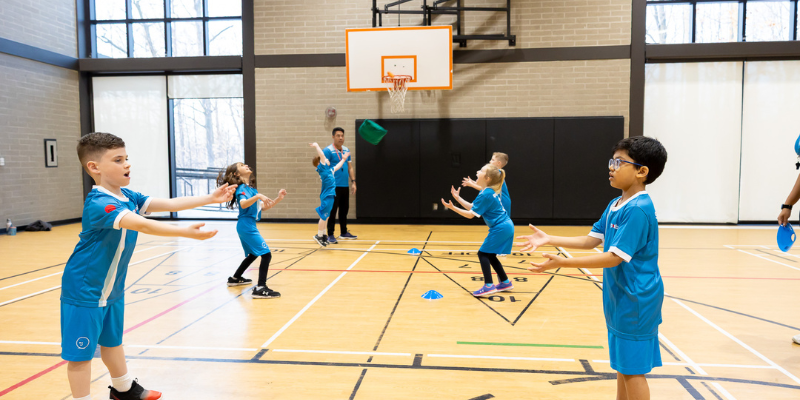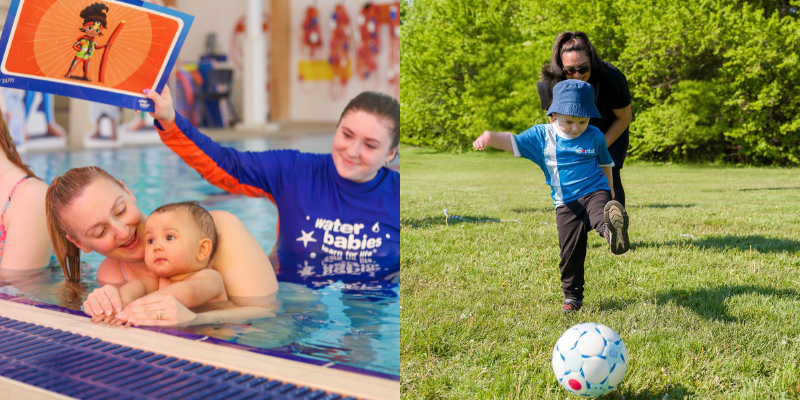
Physical literacy and water literacy go hand-in-hand. Sportball has teamed up with Water Babies Mississauga to share these essential water safety tips to help families feel confident and safe around water. For more helpful advice from Water Babies, you can read the original article here.
Why Water Safety Matters
In Canada, drowning is the leading cause of unintentional injury-related death among children under 5¹. In the United States, drowning is the leading cause of death for children ages 1- 4². Most incidents happen quickly and silently – often when an adult is momentarily distracted. Whether you’re at the ocean, lake, in your backyard pool, or enjoying bath time, these water safety tips for parents keep kids safe and build lifelong confidence.
8 Tips to Keep Kids Safe Near Water
1. Always Supervise
- Stay within arm’s reach of your child.
- Avoid distractions like phones or chatting with friends.
- When more than one adult is present, assign a “Water Watcher” who is solely responsible for keeping eyes on the children. Rotate duties every 15–20 minutes to keep focus sharp.
2. Use Flotation Devices Wisely
Inflatable armbands, pool noodles, or floaties are not life-saving equipment.
- Choose a Transport Canada-approved lifejacket in Canada or a U.S. Coast Guard-approved lifejacket in the United States when boating or enjoying open water.
- Never rely on flotation devices instead of supervision.
- Teach your child to treat floaties as toys, not safety gear.
3. Start Water Lessons Early
At Water Babies Canada, our programs introduce children from birth to 5 years to the water safely and positively.
Little swimmers learn how to:
- Turn around and hold the pool edge,
- Move toward safety,
- Understand and follow water safety rules.
Starting early helps kids gain skills, awareness, and confidence, and gives parents peace of mind.
4. Practice At-Home Water Safety
Drowning can occur in as little as 2 inches of water.
- Never leave a child alone in the bath, even for a moment.
- Empty bathtubs, buckets, and paddling pools right after use.
- Keep toilets closed and bathrooms secured.
These habits make a big difference in preventing home-based accidents.
5. Secure Your Backyard Pool
- Install a self-latching fence or gate around your pool.
- Remove ladders from above-ground pools when not in use.
- Store pool toys out of sight so they don’t tempt curious toddlers.
- Use a safety cover whenever the pool is unsupervised.
6. Be Aware Around Lakes, Rivers, and Beaches
Natural water adds hidden dangers, strong currents, drop-offs, or cold temperatures.
- Always check conditions before your child enters.
- Set clear boundaries on where they can play.
- Insist on lifejackets for boating or open-water activities.
- Never assume other adults are watching.
7. Learn CPR and First Aid
Knowing how to respond can save a life.
- Take an infant and child CPR course.
- Keep a first-aid kit near your pool or travel bag.
- Share what you learn with babysitters, grandparents, and caregivers.
For parents, visit Red Cross Canada or the American Red Cross to find certified CPR programs near you.
8. Teach Kids Safety Rules Early
Young children can remember simple rules:
- “Never go near water without a grown-up.”
- “Sit down when on the pool edge.”
- “No running near water.”
Make these part of your family routine so safety becomes second nature.
Water time should be joyful, not stressful. By combining active supervision, early swim education, and strong home safety habits, you’re giving your child the best start toward a lifetime of safe water fun.
Looking for baby and toddler swimming lessons in Mississauga?
Water Babies Mississauga offers swimming lessons designed specifically for babies and toddlers, helping little ones build water confidence, learn essential skills, and develop a positive relationship with water from an early age. Find out more and get started here.
- Canadian Paediatric Society. (2023). An injury prevention framework for children and youth in Canada. https://cps.ca/en/documents/position/injury-prevention-framework
- Centers for Disease Control and Prevention. (2025). Drowning facts and definitions. https://www.cdc.gov/drowning/data-research/facts/index.html