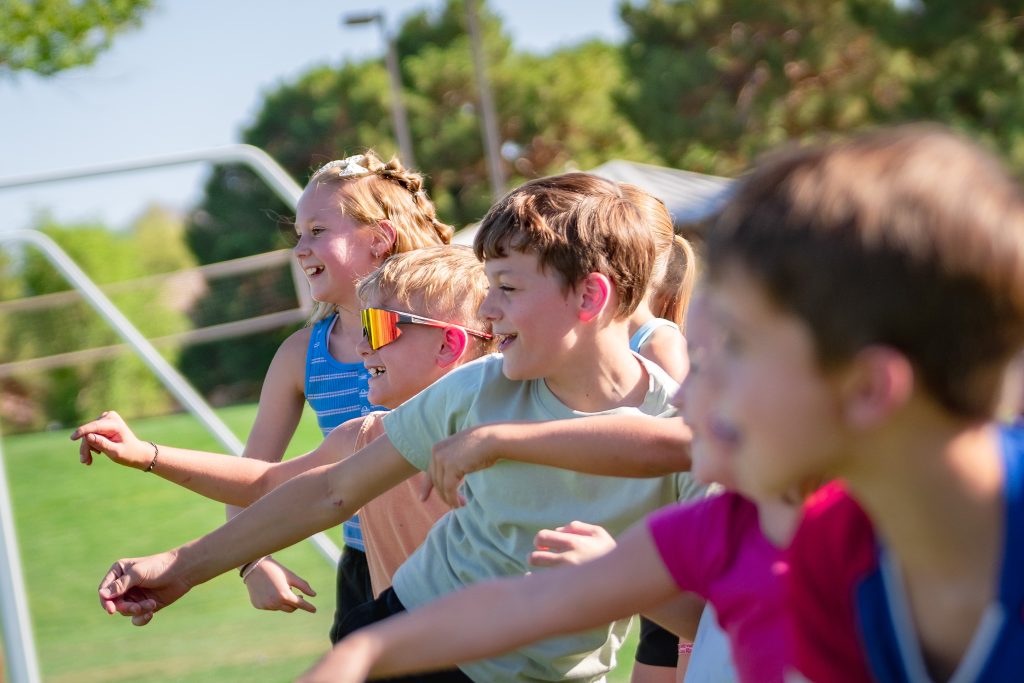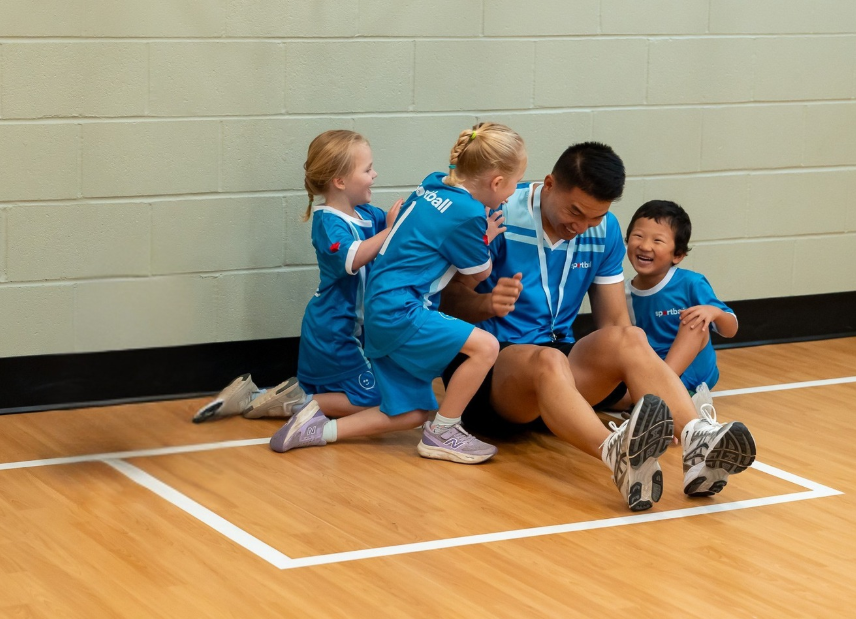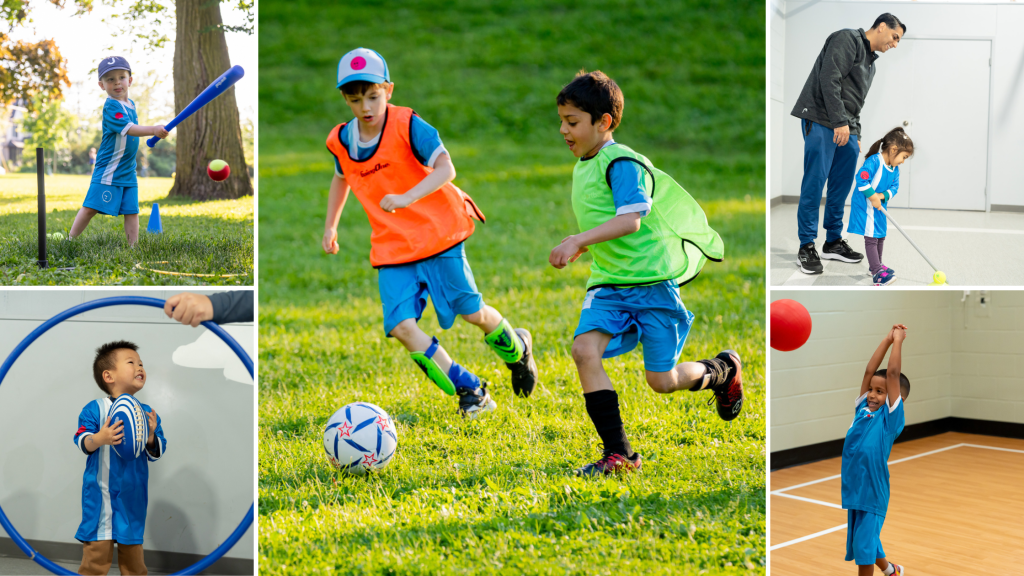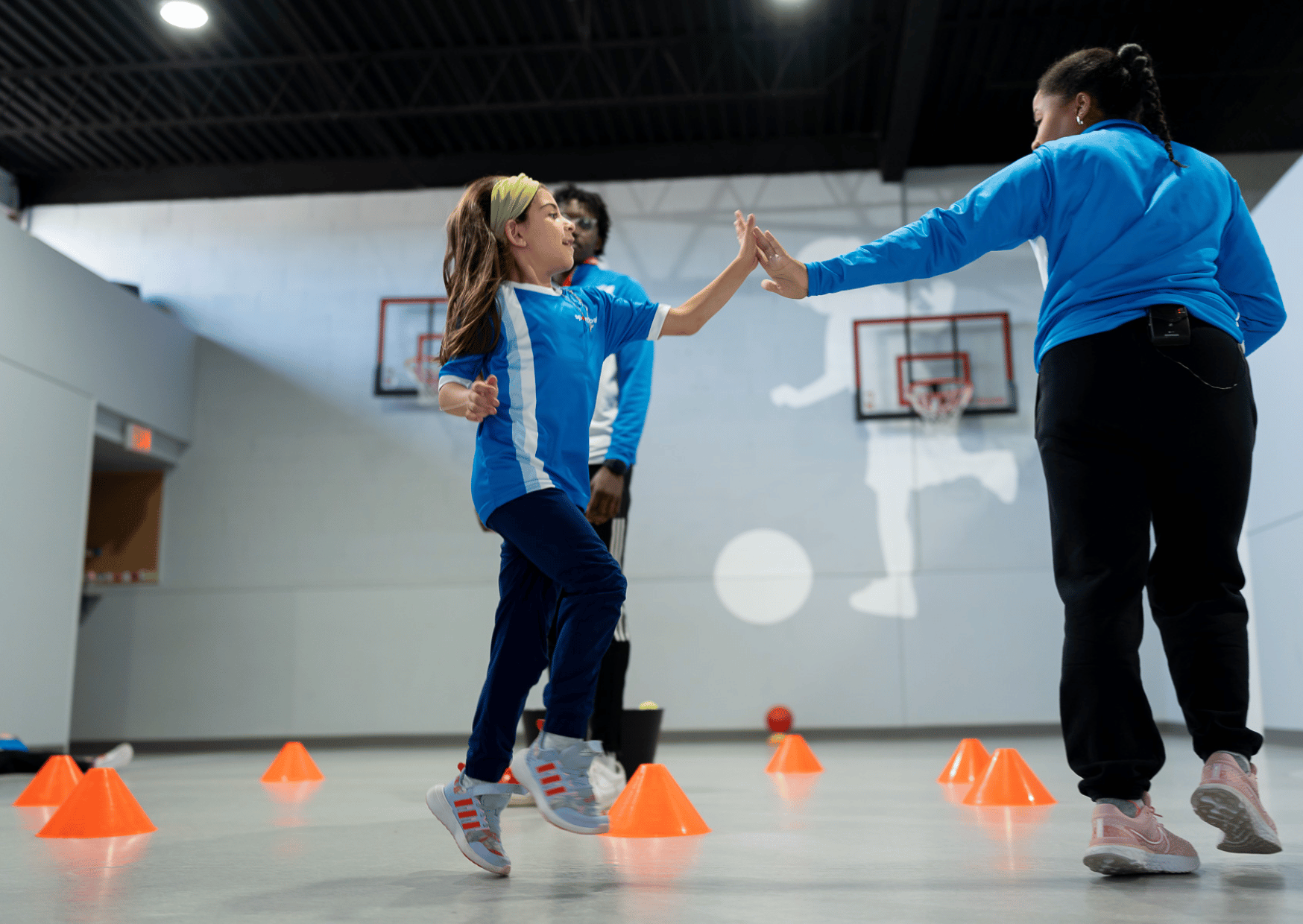
Every February 4th, National Girls and Women in Sport Day celebrates sport as more than competition— it’s about confidence, health, leadership, and well-being. As we celebrate and reflect on the progress of women’s sport, we need to ask:
How are we supporting the next generation of girls?
Why Early Sport Participation Matters for Girls
New research on women’s health is making one thing increasingly clear: the foundation for lifelong physical and mental well-being is built early. Childhood fitness isn’t just about running faster or throwing farther but strengthening bones and hearts (where girls face disadvantages), improving emotional regulation, and building resilience and confidence that carry into later life.
For girls, early positive sport experiences are especially powerful, shaping how they see their bodies, their abilities, and their place in the world.
And yet, despite growing awareness and momentum in women’s sport, participation numbers are concerning. 40% of North American girls are not participating in sports, and sport participation continues to decline with age.
There’s a widening gap between opportunity and access—one that National Girls and Women in Sport Day urges us not to ignore.
The Cost of Losing Girls in Sport
This trend is a story of lost opportunity. Girls face unique barriers through adolescence — body image pressures, social expectations, environments not designed with them in mind — that push them out of sport right when they need it most.
94% of women C-suite leaders played sports. Sports teach girls not be perfect, but to be brave and to trust their bodies. By losing girls in sports, we’re losing our next generation of change makers.
Regular physical activity as a young child staves off disease, such as osteoporosis, keeping our next gen healthy.
But here’s the good news:
We can change this.
By championing inclusive, joyful, confidence-building sport experiences, parents and educators can keep girls active and empowered.
That’s where community programs like Sportball come in — getting more girls into the game and building confidence and love of sport from an early age.
Sportball’s Longstanding Commitment to Girls in Sports
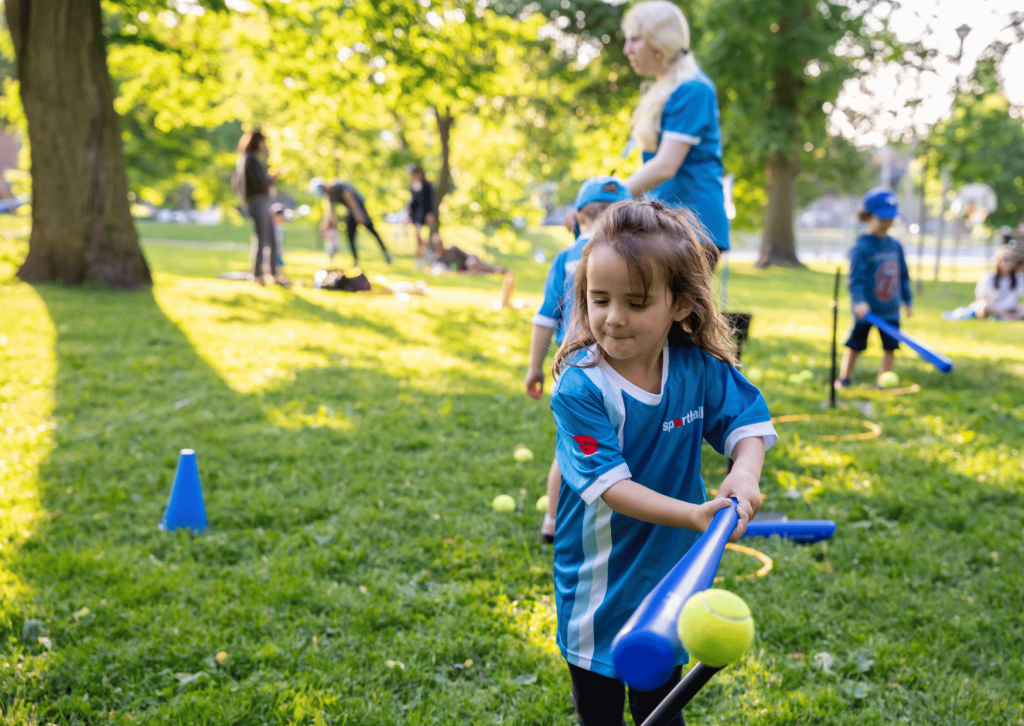
Long before today’s headlines and research began sounding the alarm, Sportball was already asking a critical question:
How do we keep girls confident, capable, and excited about sport from the very beginning?
For over 30 years, Sportball’s approach has been shaped by this lens.
Building Confidence Through Inclusive Sport Programs
The Sportball program was built on the vision of a co-founder who was a mom and educator herself, and who knew from experience that how children feel about movement early on shapes how they feel about it later.
That’s why Sportball classes are designed for girls to feel seen, supported, and successful. From developmentally appropriate coaching to a welcoming and non-competitive environment. Program initiatives that focus on female leadership aren’t a new trend for Sportball. These initiatives are part of a long-standing commitment to making sure girls don’t just show up, but feel like they truly belong and can thrive.
It’s proof that Sportball hasn’t just responded to the moment—it’s been building toward it all along.
What Girls Are Really Up Against and How Sport Can Help
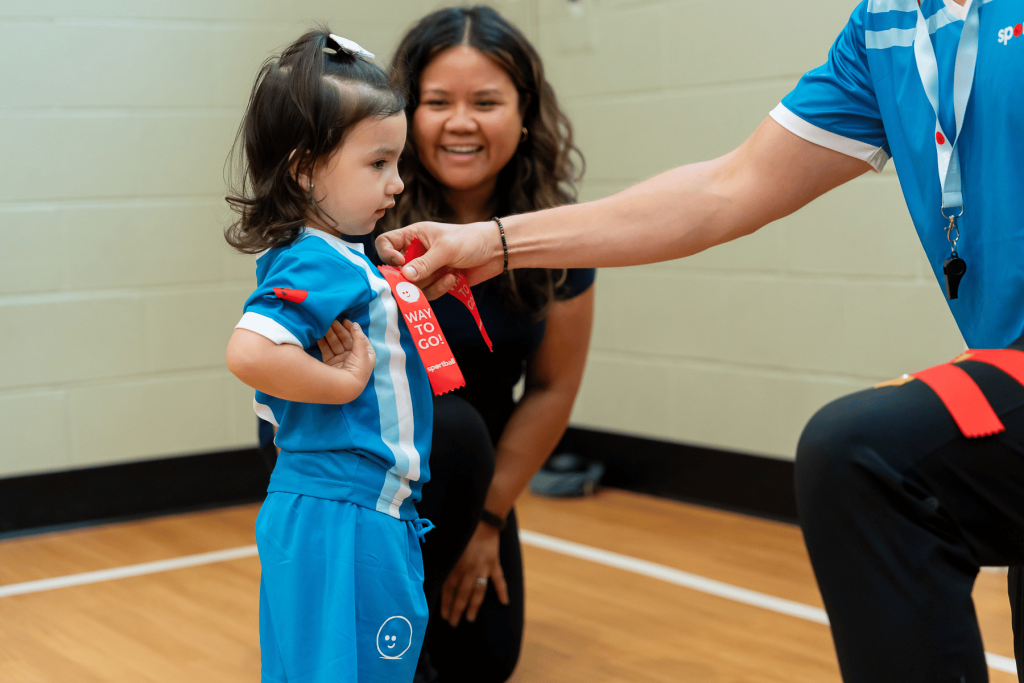
Research shows that girls don’t just need sport—they need environments that actively build resilience, because the expectations placed on their bodies, performance, and identities are often heavier and more complex than those placed on boys.
From a young age, girls deal with pressures about how their bodies should look, what they should eat, and how they should perform—all while their bodies are growing and changing in ways that require extra support.
One serious health concern is called the female athlete triad, which happens when girls don’t get enough nutrition while training hard. This can lead to problems with their menstruation, weaker bones, and low energy levels.
Breaking Stereotypes in Girls’ Sports
Beyond the physical demands, girls also face outdated stereotypes. Phrases like “you throw like a girl” get used as put-downs, which can chip away at confidence.
But here’s the truth: throwing like a girl isn’t something to apologize for—girls are strong, capable athletes.
When we treat “like a girl” as an insult, we’re teaching kids that being a girl means being less capable, something Women in Sport describes as “structural and cultural barriers [that] continue to limit aspirations”.
And that message sticks, especially when children are still figuring out what their bodies can do.
Why Early Sport Experiences Shape Lifelong Confidence
Research also shows that how girls feel about themselves in sports directly impacts whether they continue playing (Slater et al., 2021).
Girls who don’t try sports early are much less likely to start later, unlike boys who often join teams even as teenagers (Howie et al., 2016).
When girls do participate early, the benefits are powerful: they develop stronger self-esteem earlier than boys, a healthier relationship with their bodies, and emotional strength that lasts into adulthood (Brettschneider, 2001; Pedersen & Seidman, 2004; Richman & Shaffer, 2000).
The bottom line? Getting girls into sports early isn’t just about learning to play and honing skills—it’s about building confidence, physical literacy and resilience before life’s pressures intensify.
For the Love of the Game
Helping girls fall in love with sports matters now more than ever—especially as stereotypes, pressure, and early drop-off continue.
New research from Women in Sport shows that only 23% of girls aged 13–24 now dream of reaching the top in sport, down sharply from 38% just a year earlier, the lowest level recorded since tracking began.
But success in sport doesn’t have to mean podiums or going pro.
As UN Women reminds us, “sport has the power to change lives,”.
Role Models, Multi-Sport Play, and Long-Term Success
Many of today’s most influential women in sport didn’t specialize early or follow a narrow path. Players like Abby Wambach and Alex Morgan from the U.S. Women’s National Soccer Team played multiple sports growing up, building adaptable athleticism and confidence before specializing later (USA Today; ABC News).
Even beyond the field, women shaping the future of sport leadership and influence share similar roots—what sets them apart is not just power, but how they leverage it to redefine what sport can look like for the next generation (Forbes).
At its best, sport becomes a place where girls learn not just how to play—but how to belong.
How Sportball Helps Girls Shine in Sport Programs
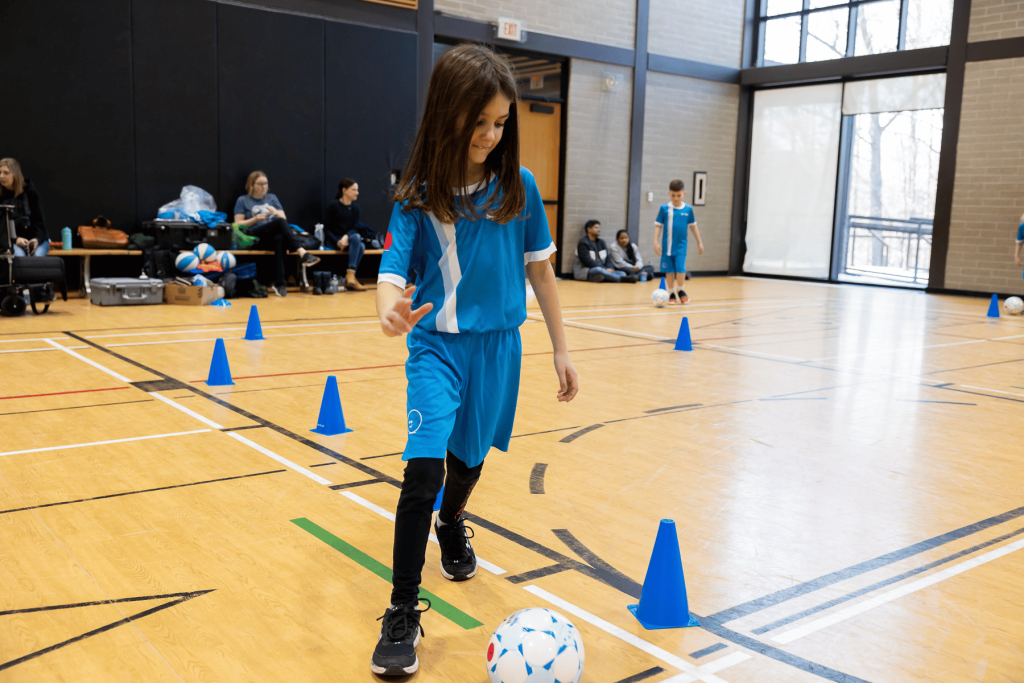
At Sportball, supporting girls in sport isn’t an add-on—it’s woven into how programs are designed and delivered at every age.
That starts with language and representation: in spaces where boys’ voices or interests may dominate, coaches intentionally invite girls into the conversation, whether that means naming Skye and Everest alongside Chase and Marshall or asking about favourite superheroes and favourite princesses in the same breath.
Storytelling plays a powerful role here, too.
As we’ve explored in How Storytelling Helps Kids Build Skills, stories allow children to see themselves as capable heroes, problem-solvers, and teammates, not just participants.
Our coaches are trained to coach with purpose, focusing on encouragement, autonomy, and effort rather than comparison or outcomes.
Multi-sport programming is another key piece. Exposure to a variety of sports builds physical literacy, reduces pressure, and allows girls to discover what they enjoy—a philosophy we break down in What Does a Multi-Sport Class Look Like?.
Across all programs, the goal is consistent: to help children—especially girls—build confidence, social skills, and a positive relationship with movement that feels safe, joyful, and empowering.
Working Together to Support Girls in Sport
So, what does National Girls and Women in Sport Day really mean for families like yours?
It’s about the everyday moments that shape a girl’s relationship with movement—feeling welcome on the field, learning skills in a supportive environment, and discovering that sport can be joyful, inclusive, and for her.
When girls step away from sports early we’re not just losing players or participation numbers. We’re losing future leaders, confident young women, and a generation that could grow up knowing their bodies are strong, capable, and worthy of celebration.
This is why Sportball is committed to creating spaces where girls feel like they belong, where they can explore, make mistakes, and discover what they love. And we’re learning alongside them, partnering with educators, researchers, and community organizations to use our programs as a space for improving how we show up for every child.
National Girls and Women in Sport Day reminds us that change starts young.
By prioritizing developmentally appropriate, fun, and confidence-building sport experiences in childhood, parents and educators can help rewrite the story—one playful class, practice, or game at a time.
Change doesn’t happen on podiums. It happens in gyms, on playgrounds, and in community programs where kids are having fun, building skills, and feeling seen.
This National Girls and Women in Sport Day, let’s commit to giving every girl the chance to fall in love with movement.
About the Author
Ronda Robinson is the Product Lead and a Mentor Coach at Sportball for the last 4 years. She is a recent graduate with a Master of Arts in Child Study and Education from University of Toronto. Ronda has a passion for designing curriculum and writing on childhood resilience.
References
Brettschneider, W. D. (2001). Effects of sport club activities on adolescent development in Germany. European Journal of Sport Science, 1(2), 1–11. https://doi.org/10.1080/17461390100071510
Frontiers in Sports and Active Living. (2021). The role of sports in youth development. Frontiers in Sports and Active Living, 3, 787334. https://www.frontiersin.org/journals/sports-and-active-living/articles/10.3389/fspor.2021.787334/full
Howie, E. K., McVeigh, J. A., Smith, A. J., & Straker, L. M. (2016). Organized Sport Trajectories from Childhood to Adolescence and Health Associations. Medicine and science in sports and exercise, 48(7), 1331–1339. https://doi.org/10.1249/MSS.0000000000000894
Lucibello, K. M., Vani, M. F., & Sabiston, C. M. (2025). The prevalence of negative weight commentary in girls’ sport and associations with body image and well-being in young adulthood. Journal of Health Psychology. Advance online publication. https://doi.org/10.1177/13591053251371809
Pedersen, S., & Seidman, E. (2004). Team sports achievement and self-esteem development among urban adolescent girls. Psychology of Women Quarterly, 28(4), 412–422. https://doi.org/10.1111/j.1471-6402.2004.00159.x
Richman, E. L., & Shaffer, D. R. (2000). If you let me play sports: How might sport participation influence the self-esteem of adolescent females? Psychology of Women Quarterly, 24(2), 189–199. https://doi.org/10.1111/j.1471-6402.2000.tb00197.x
ParticipACTION. (2024). Children and youth report card. https://www.participaction.com/the-science/children-and-youth-report-card/
Women in Sport. (2026). Why 2026 must be a turning point for girls in sport. https://womeninsport.org/news/why-2026-must-be-a-turning-point-for-girls-in-sport/
Women and Sport Canada. (2022). The rally report 2022. https://womenandsport.ca/resource/the-rally-report-2022
EY. (2020, Sept 23). Why a female athlete should be your next leader. https://www.ey.com/en_au/athlete-programs/why-a-female-athlete-should-be-your-next-leader
UN Women. (n.d.). Women and sport. https://www.unwomen.org/en/news/in-focus/women-and-sport
U.S. Department of Health and Human Services, Office on Women’s Health. (2025, Feb 19). Female athlete triad awareness: Women and girls in sports. https://womenshealth.gov/blog/female-athlete-triad-awareness-women-and-girls-sports
USA Today. (2015, July 3). Abby Wambach, Morgan Brian, Lauren Holiday: U.S. women’s soccer stars. https://www.usatoday.com/story/sports/soccer/2015/07/03/abby-wambach-morgan-brian-lauren-holiday/29665797/
ABC News. (2016, April 7). The incredible juggling act of multi-sport female athletes. https://www.abc.net.au/news/2016-04-07/the-incredible-juggling-act-of-mutli-sport-female-athletes/7307472
Forbes. (2025, October 22). America’s most powerful women in sports 2025. https://www.forbes.com/sites/maggiemcgrath/2025/10/22/americas-most-powerful-women-in-sports-2025/
Sportball. (2025-a). How storytelling helps kids build skills. https://sportball.com/blog/how-storytelling-helps-kids-build-skills/
Sportball. (2025-b). Coaching kids with purpose. https://sportball.com/blog/coaching-kids-with-purpose/
Sportball. (2025-c). What does a multi-sport class look like? https://sportball.com/blog/what-does-a-multi-sport-class-look-like/
Sportball. (2025-d). How we build confidence & social skills in kids. https://sportball.com/blog/how-we-build-confidence-social-skills-in-kids/
CSEP 2025. (n.d.). Event sessions: Canadian Society for Exercise Physiology. https://site.pheedloop.com/event/csep2025/sessions/SESSBG0PQ0OEW8CMD
Zarrett, N., & Veliz, P. T. (2023). The healing power of sport: COVID‑19 and girls’ participation, health, and achievement (Report). Women’s Sports Foundation. https://www.womenssportsfoundation.org/wp-content/uploads/2023/01/The-Healing-Power-of-Sport-FINAL.pdf