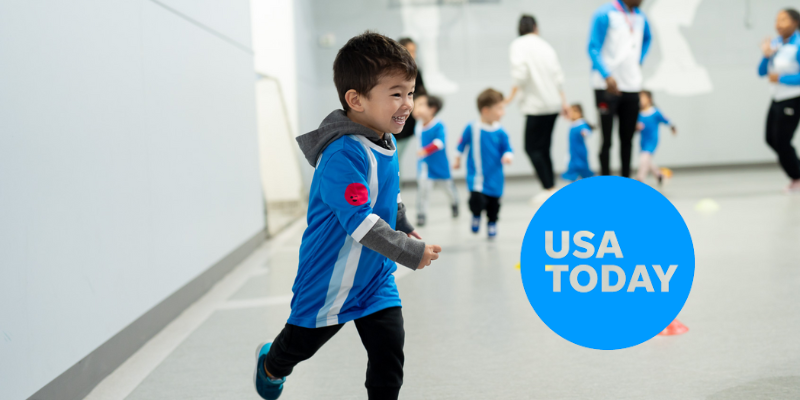
Parents often overemphasize their children’s chances of becoming professional athletes. A recent study suggests that 17% of parents believe their kids are destined to go pro, yet the reality may be starkly different. This widening disconnect between parental expectations and children’s actual experiences in sports can have cascading consequences. “This gap can lead to losing all the fun in sports along the way,” says Laura Peever, Head of Marketing at Sportball. “If the objective is to produce elite athletes, children may miss out on the joy, curiosity, and learning that come from simply playing.”
It’s this very philosophy that defines Sportball’s mission, a company that specializes in multi-sport programming for children from 16 months to 12 years. The company offers the alternative journey for children pursuing sports: an intentional first touchpoint with sports, designed not to push children toward a professional career, but to help them develop confidence, resilience, and a positive relationship with physical activity from the earliest stages.
The benefits of youth sports are far-reaching, extending well beyond the playing field. Children who engage in structured sports programs can develop social-emotional skills such as teamwork, confidence, communication, and empathy, alongside cognitive gains in concentration, problem-solving, and leadership.
Physical development can be equally critical, from coordination and motor skills to foundational fitness that supports long-term health. “Our programs are preventative,” says Jason D’Rocha, Vice President of Sportball. “We deal with issues like obesity and sedentary behavior before they start, helping children build healthy habits that can serve them their entire lives.”
Peever believes that mental health impact is equally crucial. She states, “Getting kids off screens and into safe, playful, community-based environments could help address the growing mental health challenges children face today.”
Sportball’s approach is carefully tailored to children’s developmental stages. From 16 months to two years, the ABCs of Sport program uses elements like puppets, songs, and bubbles to teach pre-verbal children basic motor skills and coordination. By the ages of two to three, children progress to parent participation with storytelling and age-appropriate skill-building activities. From three to 12, drop-off programs encourage independence while fostering teamwork, leadership, and social skills that are aimed at translating to life beyond sports.
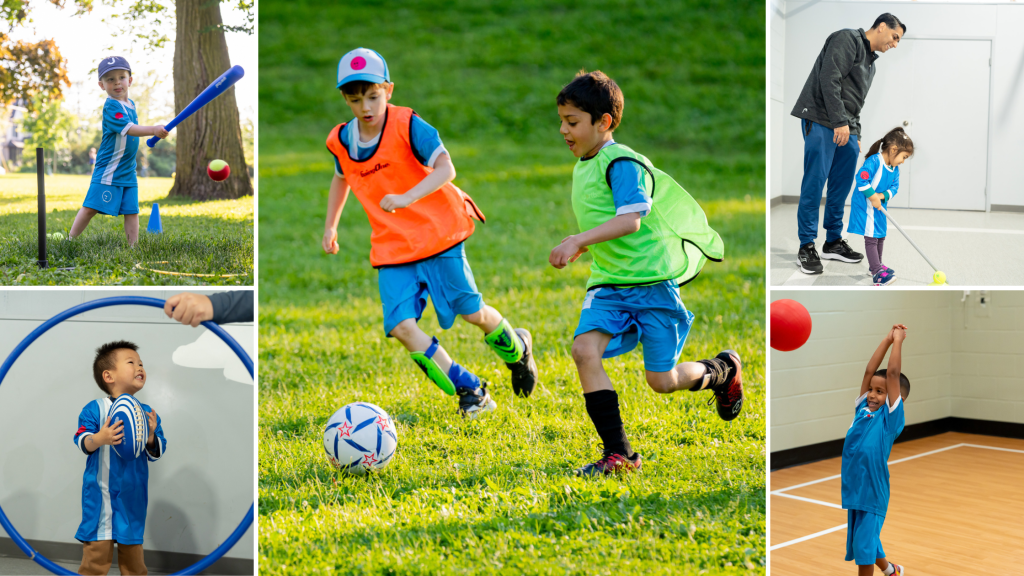
At Sportball, multi-sport experiences are central: children rotate weekly through basketball, soccer, football, and more, exposing them to diverse movement patterns, reducing strain, and keeping engagement and excitement high. “Multi-sport play allows children to discover what they love,” says Peever. “Some kids are self-directed, but others might never pick up a ball otherwise. Exposure ensures they benefit from sports without early specialization.” To this, D’Rocha adds, “Contrast creates attention. Switching sports frequently sparks curiosity and creativity, helping kids find their passion organically.”
Fun remains at the core of Sportball’s programs. Classes use storytelling, imaginative scenarios, and animated instruction to engage children, while coaches adapt to individual needs, ensuring every child feels included and successful. Peever calls this the “Sportball magic”: the ability for a coach to manage the beautiful chaos of a class, tailoring guidance so that children of all abilities can participate fully. Games like “Popcorn,” where toddlers collect colorful balls from across the gym, can teach basic skills, turn-taking, and attention while offering a first taste of achievement and confidence.
This inclusive and purposeful coaching extends to Sportball’s own team. A rigorous certification system trains coaches from rookie level to master, equipping them to lead, mentor, and eventually open franchises themselves. “Our coaches learn to coach with purpose,” explains D’Rocha. “Every skill, activity, and game is designed with a clear outcome, whether that’s building coordination, resilience, or confidence, and we communicate that purpose to parents, too.”
Ultimately, Sportball’s philosophy embraces the broader, long-term value of structured youth sports. By combining physical activity with social interaction, mentorship, and multi-sport exposure, children can develop skills that transfer beyond the gym: leadership, empathy, resilience, and healthy habits.
“Well-designed youth sports programs like Sportball can turn a game into a catalyst for personal growth, emotional resilience, and community well-being,” says D’Rocha, “shaping a generation that’s confident and capable.”
In a time when digital moments are proliferating and parents are seeking meaningful, human-centered opportunities for their children, Sportball offers a future-proof model. “We’re in a world that is seeking physical experiences,” Peever reflects. “These programs create real-life human connections, learning and playing, that’s something technology cannot replicate. That’s a rare and invaluable gift for children today, and for communities of tomorrow.”
– Lyssanoel Frater, USA Today Contributor