There are a lot of youth sports programs out there, and not all of them are created equal. The right programs build physical skills, confidence, and a genuine love of movement. The wrong ones can do the opposite. Knowing what to look for before you register makes all the difference.
This guide breaks down the seven key factors that separate a great kids sports program, pitfalls to avoid, and how Sportball is a cut-above the rest.
1. Age-Appropriate Design
What to look for: A great youth sports program is built to meet children where they are in their gross motor, behavioural, and emotional development. The American Academy of Pediatrics recommends that youth sport programs match a child’s developmental stage, cautioning that pushing competition and a single sport focus increases injury risk and can turn children off sports entirely.1
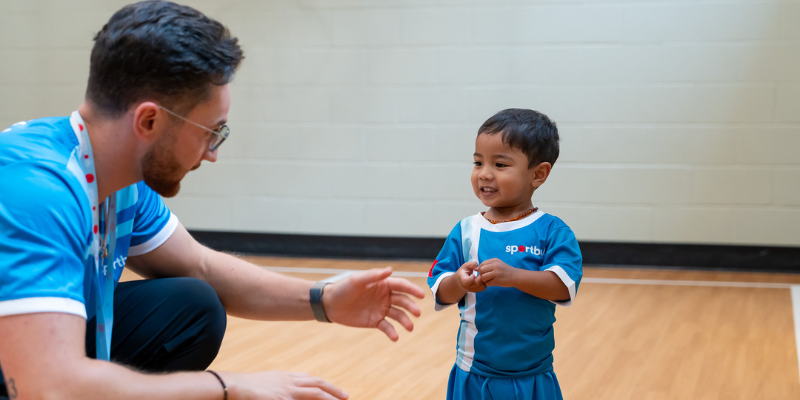
At Sportball: Our fun-first programs for kids 16-months to 12-years are designed to progress with children as they age, with programming mapped to gross motor, behavioural, and social milestones for each stage. A fun-first approach keeps kids engaged in sport for the long-term.
2. Multi-Sport Exposure
What to look for: One of the most important things a youth sports program can offer young children is variety. According to Johns Hopkins Medicine, early specialization in a single sport raises the risk of overuse injuries, burnout, and kids dropping out of sport altogether. Multi-sport participation provides children with variety in their athletic foundation. Look for programs that introduce kids to multiple sports rather than locking them into early specialization. If a program wants to lock your 3-year-old into year-round soccer, it may be worth asking what they’re missing out on.
At Sportball: Our multi-sport model covers 8 core ball sports: soccer, baseball, basketball, football, hockey, volleyball, golf, and tennis, all in one program. Kids build a wide range of movement skills and get to discover what they love before they specialize. We’re always adding new sports to the mix to keep things fresh and customize to local tastes, including: Pickleball, Rugby, Cricket and Lacrosse.
3. A Fun-First, Play-Based Approach
What to look for: The single biggest predictor of whether a child stays in sport long-term is whether they have fun. According to research, 70% of kids quit organized sports by age 13, and the number one reason is that it stopped being fun.4 A George Washington University study reinforces these findings: of 81 reasons children cited for why sports were fun, winning ranked 48th. What kids need is the chance to play, try their best, and be guided by a coach who makes sports a safe environment and enjoyable enviroment.5
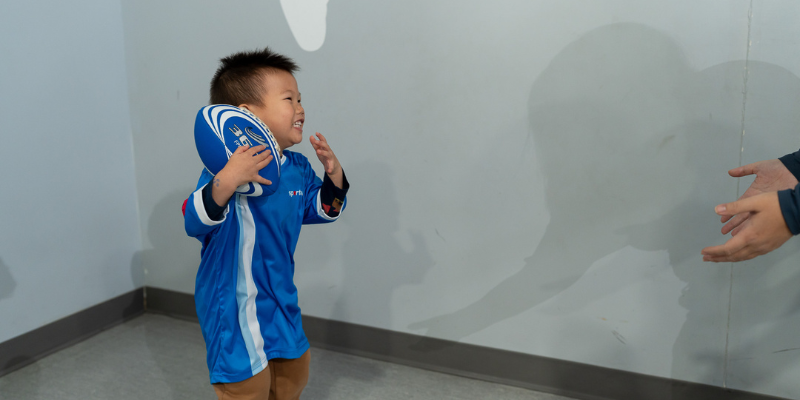
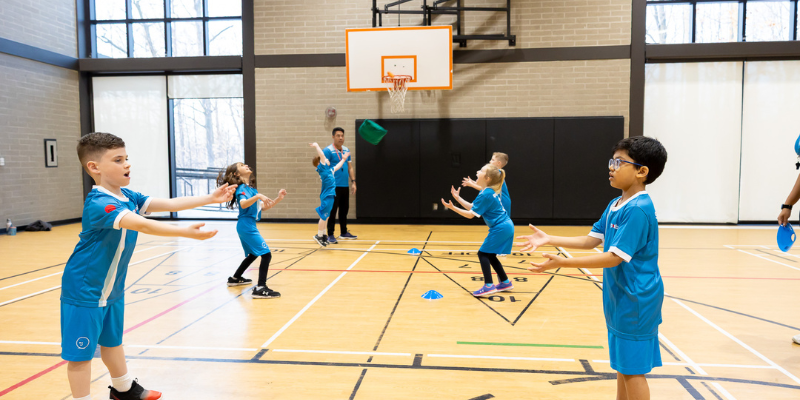
At Sportball: Our non-competitive, play-based approach is built around what the research supports: when kids are having fun, learning happens naturally. Every drill and game has a developmental purpose, and kids are progressing their skills without even knowing it.
4. Qualified, Purposeful Coaches
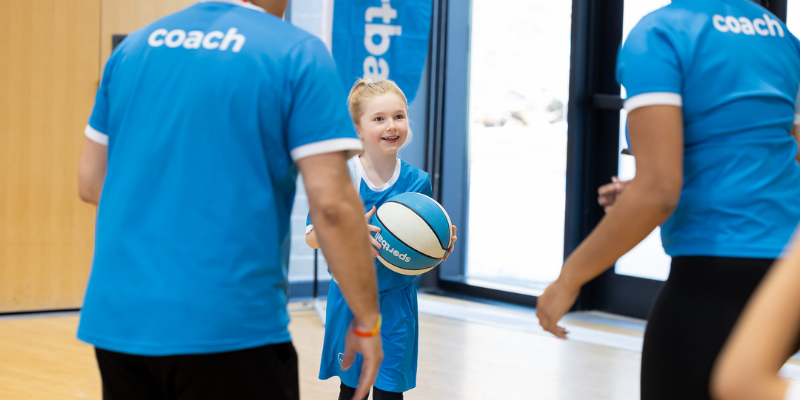
What to look for: Ask about coach qualifications before you register. According to Project Play’s “Why Good Coaches Matter” research, only 36% of youth coaches are trained in effective techniques. Great coaches understand child development, create inclusive environments, and make every child feel capable. Professional training makes a real difference.
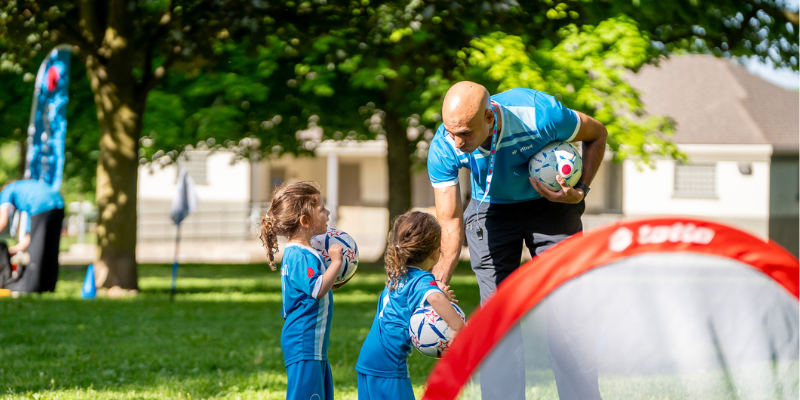
At Sportball: Every Sportball coach completes a structured, multi-level certification program built around our “Coaching with Purpose” methodology, covering child development, physical literacy, empowering communication, class management for different age groups, and inclusive programming. Level One certification requires a minimum of 100 supervised coaching hours; Level Two requires 200 hours or more.6 You won’t find volunteer coaches at Sportball, only trained purposeful professionals.
5. An Inclusive Environment
What to look for: Every child, regardless of ability level, should feel welcomed, supported, and celebrated. The American Academy of Pediatrics emphasizes that negative early sport experiences can affect a child’s relationship with physical activity for years.1 Look for programs that explicitly welcome all abilities and prioritize every child’s confidence over competitive outcomes.
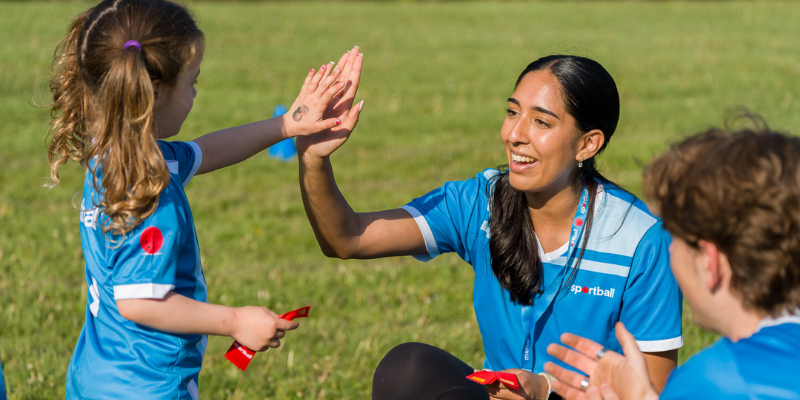
At Sportball: Inclusivity and safety are built into every Sportball class. Our programs welcome children of all abilities into both traditional and adapted programs, and our coaches are trained to ensure every child feels confident and supported.
6. Flexibility to Fit Your Family
What to look for: A great program doesn’t mean much if it doesn’t fit your real life. Between school, work, and the juggle of life with kids, sustainability matters. A good fit for the family calendar and family budget will look different for everyone.
At Sportball: Programs run once a week, all year long, offering weekday and weekend options to fit busy schedules. Necessary equipment is included with registration, there is no additional travel required, and flexible payments are offered, easing the burden on family’s wallets while providing the highest quality experience for kids.
7. Safety First
What to look for: Youth sports injuries are more common in programs that emphasize early sport specialization, adult-sized equipment, or high-volume drills without age-appropriate design. A program that takes safety seriously will be transparent about it. Parents should ask whether coaches are trained in first aid, whether background checks are conducted, whether equipment is age-appropriate and well-maintained, and whether there are clear drop-off, pick-up, and code of conduct policies in place. If the answers are vague or hard to find, that’s information too.
At Sportball: Safety is built into every layer of how Sportball operates. Our programs use age-appropriate equipment and class plans designed to prevent sport-related injuries. Coaches are vetted, trained in first aid, and held to a clear code of conduct. And because our programs are non-competitive and play-based, the pressure and injury risks that come with competitive leagues and early specialization simply aren’t part of the picture.
Your Quick Kids Sports Program Checklist
Before you register, ask:
- Is the program designed for my child’s age and developmental stage?
- Does it expose kids to multiple sports or movement patterns?
- Is fun and play the focus, not competition and winning?
- Are coaches professionally trained and certified in child development?
- Are safety precautions and coach vetting procedures in place?
- Does the program build fundamental movement skills progressively?
- Does it welcome children of all ability levels?
If you can answer yes to all of these questions, you’ve found a great program!
How Sportball Checks Every Box
Sportball has been delivering research-backed, play-based kids sports programs for over 30 years, for children 16 months to 12 years, across North America and beyond. Multi-sport curriculum. Age-appropriate design. Certified coaches. Fun first, every time.
Explore our programs at sportball.com and see it for yourself.
References
1 American Academy of Pediatrics. (2016). Sports specialization and intensive training in young athletes. Pediatrics, 138(3), e20162148. https://publications.aap.org/pediatrics/article/138/3/e20162148/52612/Sports-Specialization-and-Intensive-Training-in
2 Jahagirdar, I., Venditti, L. A., Duncan, A., Reed, N., & Fleming, S. (2017). Exploring the relationship between participation in a structured sports program and development of gross motor skills in children ages 3 to 6 years. Journal of Occupational Therapy, Schools, & Early Intervention. https://doi.org/10.1080/19411243.2017.1325816
3 Seligman, E. (n.d.). Youth sport specialization. Johns Hopkins Medicine. https://www.hopkinsmedicine.org/health/conditions-and-diseases/sports-injuries/youth-sport-specialization
4 Solomon, J. (2019, March 1). Why good coaches matter. Aspen Institute Project Play. https://projectplay.org/news/2022/2/15/why-good-coaches-matter
5 Farrey, T. (2017, December). George Washington University study on what makes sports fun for children. Aspen Institute / BBC. https://mhsaa.com/topics/blog-director/youth-sports-dropouts?page=48
6 Sportball. (2017). Coach mentorship program [Internal document]. Sportball.
7 SHAPE America. (n.d.). Physical literacy. https://www.shapeamerica.org/MemberPortal/events/physicalliteracy.aspx
8 Sportball Central Team. (2026). 10 questions every parent should ask before signing their child up for sports. Sportball. https://sportball.com/blog/10-questions-every-parent-should-ask-before-signing-their-child-up-for-sports/