To sum it up:
- Teamwork in sports takes different forms.
- High-interdependence sports like soccer and basketball require kids to constantly communicate and adapt together.
- Defined-role sports like baseball teach children responsibility and trust as they master specific positions.
- Co-active sports like relay racing build mutual encouragement while focusing on individual performance for a shared goal.
- A positive, non-competitive multi-sport environment matters more than you think.
Teamwork in youth sports is the collaborative effort of children working together toward a shared athletic goal. It involves communicating effectively, understanding specialized roles, and supporting peers during play. Learning teamwork through sports helps kids develop essential social skills, emotional resilience, and mutual trust that extend far beyond the playing field.
You might wonder how to choose the right sport to actually teach these skills to your child. This guide breaks down exactly how different sports build teamwork, helping you match an activity to your child’s personality and your family’s goals to ensure they learn to collaborate, communicate, and lead others while having fun.
Why teamwork matters in youth sports
Teamwork in youth sports is a foundational developmental tool that builds communication, collaboration, trust, and resilience. Children who learn to work within a team are actively practising social skills they will use in school projects, family relationships, and future careers.
Building foundations for future success
Working together toward a common goal teaches children how to communicate their needs and listen to others. These cooperative skills translate directly to the classroom, helping kids integrate into diverse groups and share responsibilities.
Evidence shows that team sport participation is strongly associated with better health outcomes than individual activities alone. A study on the psychological and social benefits of sport highlights that the most commonly reported benefits are improved self-esteem, better social interaction, and overall psychological well-being. It turns out that shared athletic goals create a unique kind of bond!
Developing emotional intelligence and resilience
Team sports offer a highly interactive, safe environment for children to navigate complex emotions. They learn how to manage wins and losses gracefully, resolve minor conflicts with peers, and develop empathy for teammates who might be struggling.
The Long-Term Development in Sport and Physical Activity 3.0 framework places a strong emphasis on psychological components like confidence and social connectedness alongside physical skills. When kids feel they belong to a supportive, unified group, they are much better equipped to bounce back from setbacks. You can read more about building this grit in Sportball’s guide to helping your child bounce back.
Types of teamwork in sports
Teamwork in sports falls into three main categories:
- high-interdependence (constant, fluid collaboration),
- defined-role (specialized trust and responsibility),
- and co-active (parallel individual efforts for a shared goal).
High-interdependence teamwork
These are fluid, dynamic sports where success depends on players constantly reading, reacting, and adjusting to each other in real time. The play never stops for long, and everyone is involved simultaneously.
Key skills developed here include non-verbal communication, shared spatial awareness, and quick adaptability.
Defined-role teamwork
These are positional sports where each player must master a specific job and trust their teammates to do the exact same. The action is often structured in short bursts or tactical plays.
Co-active teamwork
These sports involve individual performances that are added together to achieve a team result. Players do not interact with each other physically during the play, but they share a mutual objective and collective score.
Best sports for building teamwork
The best sports for building teamwork include soccer and basketball for interdependent collaboration, baseball and volleyball for defined-role trust, and relay swimming or track for co-active support. Different sports teach distinct variations of cooperation depending on their rules and structure.
| Teamwork Type | Sport Examples | Key Skills Learned | Best Starting Age | Example Scenario |
|---|---|---|---|---|
| High-Interdependence | Soccer, Basketball, Hockey | Communication, adaptability, spatial awareness | 16 months | Passing the ball out of pressure to an open teammate. |
| Defined-Role | Baseball, Softball, Volleyball | Trust, responsibility, focus | 16 months | A catcher trusting the pitcher to throw a strike. |
| Co-Active | Swim Relays, Track Relays | Mutual support, personal accountability | 6 years | Cheering wildly as a teammate finishes their leg of the race. |
High-interdependence sports
Soccer: Soccer requires energetic, constant movement and field vision. Children learn to pass, share the ball, and move into open spaces to support their teammates even when they do not have the ball at their feet to attack or defend.
Basketball: Basketball relies heavily on quick, non-verbal communication on a smaller court. Kids learn the value of setting screens to help a teammate get open, making quick passes to assist a score, and coordinating defensive shifts as a unified block.
Hockey: Hockey introduces complex teamwork elements like line changes on the fly and highly coordinated passing plays between offence and defence. The Mayo Clinic guidelines on appropriate sports suggest that while ages 6 to 9 are great for fundamental skills in soccer, children are typically ready for the more complex, synchronized skills of basketball and hockey around ages 10 to 12.
Defined-role sports
Baseball and Softball: These games perfectly illustrate specialized trust. The dynamic between a pitcher and a catcher requires intense focus and mutual reliance. Meanwhile, outfielders and infielders must cover their specific zones, trusting that their teammate will catch the ball in the adjacent area.
Volleyball: Volleyball operates on a beautifully structured, tactical sequence of bump, set, and spike. A point depends on each athlete fulfilling their specialized role perfectly in sequence, from the defensive libero to the strategic setter and the powerful hitter at the net.
Co-active sports
Swimming Relays: In the pool, a child is swimming entirely on their own, but their individual speed contributes directly to the team’s total time. This setup fosters a deeply supportive environment where the most important camaraderie happens on the deck as kids cheer loudly for their peers.
Track & Field Relays: The clean baton pass is a rare moment of direct, physical cooperation in an otherwise individual sport. It teaches precision and timing, while highlighting the personal accountability of each runner completing their leg of the race for the collective good.
How to maximize teamwork lessons
Adults can maximize teamwork lessons by praising a child’s effort and cooperation over their athletic output, encouraging them to try different positions, and asking open-ended questions about how they supported their peers. The environment a coach creates matters more than the sport itself.
Focus on process over winning
Praising a good pass, a supportive comment on the bench, or a strong defensive block is far more effective than only celebrating a goal. This approach reinforces that effort and cooperation are the true objectives of participating in a league.
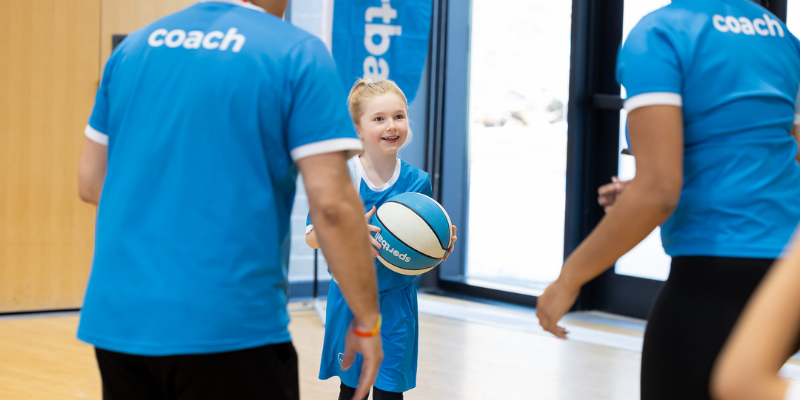
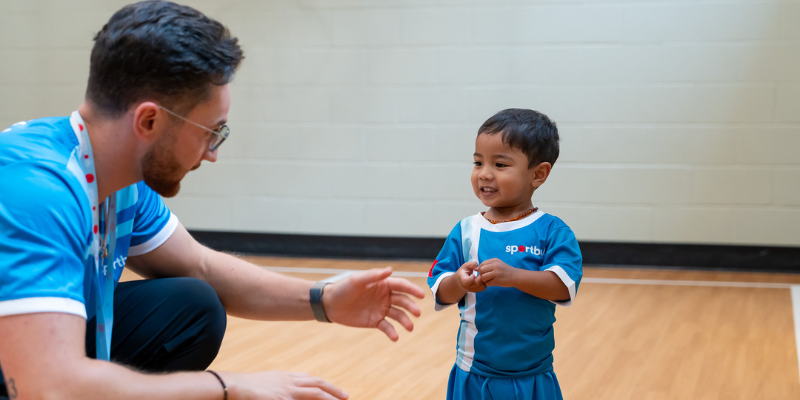
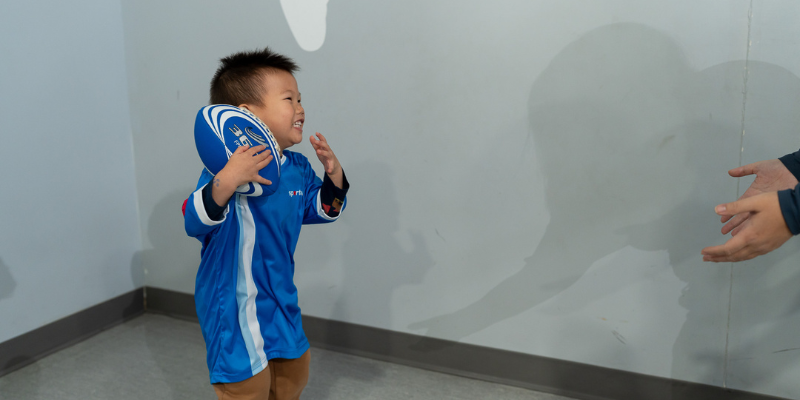
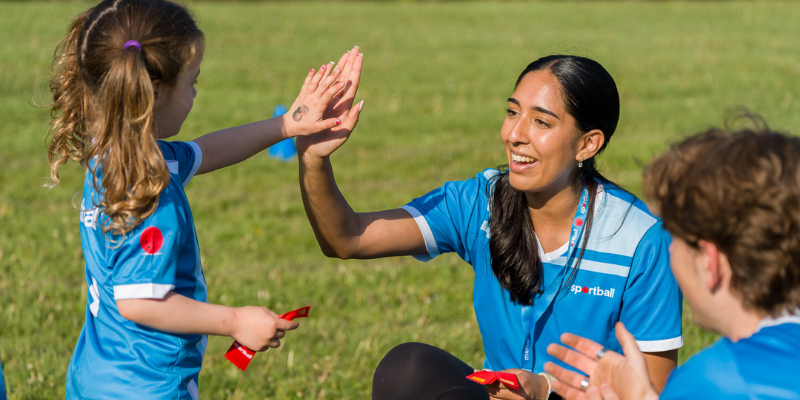
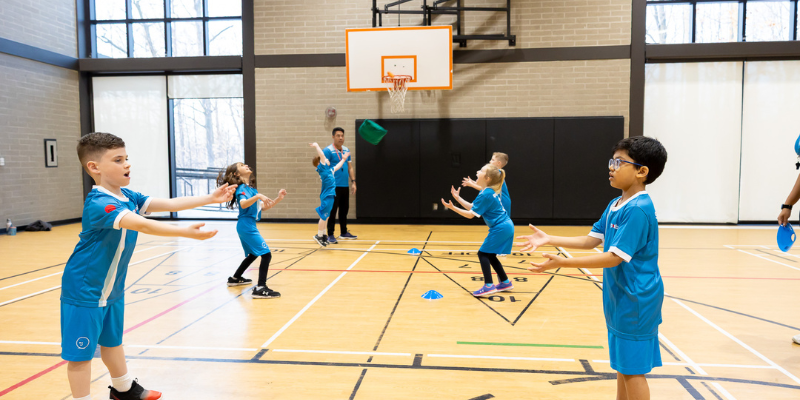
At Sportball, our programming is non-competitive, with a skills-first philosophy. We know that framing a drill as “launching a rocket with your foot” or “feeding hamburgers to hungry hippos” keeps the focus on joyful play. When we remove the pressure of the scoreboard, kids feel free to cooperate and take positive risks.
Encourage trying different positions
Rotating roles helps children develop empathy and understand the unique challenges their teammates face. A child who normally plays forward will gain a brand-new appreciation for their goalie after spending a practice trying to block shots.
This practice builds a much more holistic, supportive, and inclusive team perspective where everyone respects everyone else’s contribution. It teaches that every single position has immense value.
Ask the right questions after the game
The car ride home is a crucial time for cementing positive lessons. Avoid starting with questions about the final score or who won the tournament.
Instead, ask specific, open-ended questions that highlight cooperation and leadership. Try asking, “What was a moment where your team really worked well together today?” or “How did you help a teammate who was struggling?” You can find more helpful conversation starters in our playbook for supportive sports parents.
Warning signs of negative team environments
A negative team environment is characterized by a win-at-all-costs mentality, unequal playing time, coaches who yell or demean players, and a culture where teammates blame each other for mistakes. Recognizing these red flags is crucial to protecting your child’s confidence and love of movement.
Signs of a negative team culture
A team should be a place where every child belongs and feels safe making mistakes while they learn to coordinate their body. Watch out for these warning signs:
- A coach who only gives playing time to their “star” athletes while others sit on the bench.
- Teammates who routinely criticize or blame each other for missed plays or lost games.
- An excessive, high-pressure focus on winning competitive leagues rather than developing fundamental skills.
- A lack of fun, joy, and playful energy during drills and practices.
Talking to your child and the coach
If you spot these signs, start by checking in with your child gently. Ask simple questions like, “Are you having fun at practice lately?” or “How do you feel when you make a mistake in a game?”
If you need to speak with the coach, keep the conversation focused on your child’s experience and your family’s goals. You might say, “We are really hoping to focus on skill-building and teamwork right now. Can we talk about how to make sure they are getting those opportunities during practice?”
Frequently asked questions
The most frequently asked questions about kids’ sports and teamwork cover the best age to start, how individual sports help, and whether shy children should participate.
What is the best age for a child to start a team sport?
The best age for a child to start a team sport is typically around 6 years old, when they are developmentally ready for simple, organized activities. The American Academy of Pediatrics organized sports guidelines note that before age 6, the emphasis should heavily be on free play, multi-sport, and building physical literacy. Even when joining a team, the focus should remain on fun and skill development.
How can individual sports like martial arts or tennis teach teamwork?
Individual sports like martial arts or tennis teach teamwork by building excellent teamwork-adjacent skills in a group environment. Participating in a martial arts dojo or a tennis club teaches sportsmanship, profound respect for opponents, mutual encouragement, and personal accountability. Even without passing a ball, children learn to support their peers and contribute positively to a structured group setting.
Is my shy child a good fit for a team sport?
A shy child is absolutely a good fit for a team sport, if the environment is positive! A well-coached team offers a structured way for a shy child to build confidence. It gives them a clear role and a shared activity to bond over, removing the pressure of unstructured social time.
Choosing the right sport for teamwork
Choosing the right sport to build a team player requires matching the type of collaboration to your child’s personality and ensuring a positive coaching environment. Understanding the different types of collaboration, from highly interdependent games to defined-role and co-active sports, is key to finding the right fit. The best sport is always the one that keeps them excited to move, as the overall environment matters far more than the specific game.
Before committing to a long season, observe a few different local teams or classes in action. Watch their coaching style and the team dynamic to ensure it aligns with your family’s values.
To build a strong leadership foundation, start with a multi-sport program like Sportball. Our non-competitive approach ensures every child learns the fundamentals of teamwork in a fun, supportive setting. Ready to jump in? You can explore class schedules to find a program near you.