Let’s sum it up:
- Sports readiness is a blend of physical, cognitive, and emotional milestones.
- Emotional signs like taking turns and listening to other adults are just as important as running.
- Multi-sport programs help prevent burnout and build well-rounded confidence.
- The best introductory programs prioritize fun, fundamental skills, and positive environments.
You may have heard us say that each child will be ready to start their sports journies at different time. While Sportball starts programming at 16 months, you might wonder if that’s the right time to sign your child up for a sports program. This guide moves beyond just age to cover the three core signs of readiness: physical, cognitive, and social-emotional.
What is sports readiness?
Sports readiness is the combination of physical competence, cognitive understanding, and social-emotional maturity that allows a child to safely enjoy and benefit from an organized activity.
More than physical ability
Readiness is not a single switch that flips when a child reaches a certain age. It is a gradual development across different areas of a child’s life. A key part of this is building physical literacy, which is the motivation, confidence, physical competence, knowledge, and understanding to value and take responsibility for engagement in physical activities for life. When a child feels confident in their fundamental movements, they are much more likely to participate with joy.
Three pillars of readiness
Evaluating whether your child is ready means looking at three areas of their development.
- Physical Readiness: Ability to participate (with grown ups at first!), walk, and understand simple instructions.
- Cognitive Readiness: This involves the ability to listen to a coach, understand very simple rules, and maintain focus for short periods during an activity.
- Social & Emotional Readiness: This is the capacity to interact safely with peers.
Age-by-age guide to sports readiness
An age-by-age guide to sports readiness outlines the specific motor skills, attention spans, and appropriate activities that match a child’s developmental stage.
Ages 2 to 5: Active start and discovery
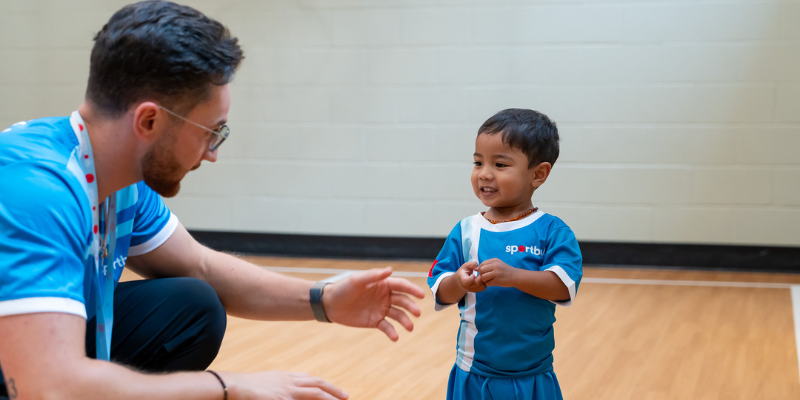
During the toddler and preschool years, children are developing fundamental movement skills like running, jumping, and throwing. Their attention spans are short, and they learn best through play and multi-sport programming.
Unstructured free play is critical at this age, and the focus should be on activities that build core skills rather than competitive sports. Excellent options include tumbling, dancing, swimming, and playground games. Research shows that play helps children plan, organize, get along with others, and regulate emotions.
When looking for a program, prioritize non-competitive, play-based environments focused on fun and exploration. This is where programs like Sportball build a strong foundation of physical literacy and confidence, using imaginative games like waking a sleeping dinosaur to teach movement with purpose.
Ages 6 to 9: Fundamentals and skill-building
Children in this phase typically show improved coordination, vision, and attention spans. They are generally ready to learn basic rules and simple strategies.
This is an ideal time for an introduction to organized sports with simplified rules. Multi-sport participation is key to avoid burnout and overuse injuries. Medical experts note that improving vision, attention span, and skills make organized activities like t-ball, soccer, gymnastics, tennis, or martial arts appropriate at this stage.
Look for a program that guarantees equal playing time, emphasizes skill development over winning, and employs coaches specifically trained to work with this age group.
Ages 10 to 12: Skill-refining and tactics
By late childhood, kids can understand complex rules and team strategies. However, sudden growth spurts may temporarily impact their coordination and balance.
While they might begin considering a primary sport, they should still be encouraged to play others.
Seek out qualified coaching that focuses on technique, teamwork, and sportsmanship over high-pressure competition.
| Age Group | Key Physical Skills | Social/Emotional Development | Cognitive Abilities | Recommended Activities |
|---|---|---|---|---|
| Ages 2-5 | Running, jumping, catching, throwing | Learning to share, parallel play | Short attention span, imaginative thinking | Multi-sport programming |
| Ages 6-9 | Improved coordination, balance, agility | Understanding teamwork, taking turns easily | Grasping basic rules, longer focus | Entry-level soccer, gymnastics, t-ball, with multi-sport mix |
| Ages 10-12 | Advanced stamina, complex motor skills | Building peer relationships, resilience | Strategic thinking, understanding tactics | Basketball, hockey, volleyball, with multi-sport mix |
Emotional and social signs of sports readiness
Emotional and social signs of sports readiness include the ability to listen to another adult, interact positively with peers, and handle minor frustrations without becoming completely overwhelmed.
Following instructions from adults
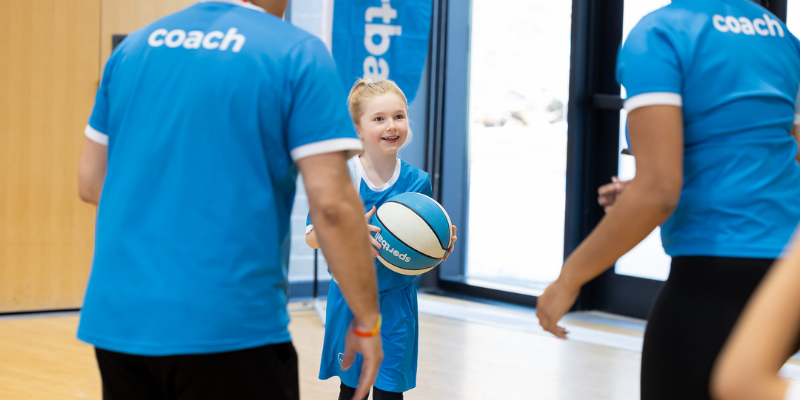
Being coachable is a major milestone for young athletes. This means listening to and respecting a coach who is not their parent. It requires a level of trust and the ability to follow group directions.
A helpful point for parents is to observe your child in group settings like daycare or library story time. Do they participate and follow the leader’s directions most of the time?
Interacting with other children
Organized activities require sharing space, equipment, and attention. Your child should be developing the ability to take turns and work alongside others without constant conflict.
Ask yourself if they can play a simple game with a peer and understand the basic concept of “your turn, my turn.” Perfect harmony is never the goal, but a general willingness to cooperate is a great sign.
Handling frustration and losing
Resilience is a developing skill in childhood. We look for a child’s ability to try again after failing, or to understand that not everyone can win at the same time.
The goal is not perfection. It is completely normal for a young child to feel disappointed. What matters is a basic ability to cope with that frustration without a major meltdown, allowing them to eventually rejoin the fun.
Choosing the right first sports program
Choosing the right first sports program requires evaluating the provider’s philosophy, the coaches’ qualifications, and the overall class structure to ensure a positive, developmentally appropriate environment.
Program philosophy on development versus winning
For young children, the philosophy should be entirely focused on fun, participation, and skill development. Early experiences shape a child’s lifelong relationship with physical activity.
Watch out for red flags. Tryouts for kids under 13 years old, league standings, and a focus on creating all-star players indicate a program that may be too intense for early development.
Coach qualifications and style
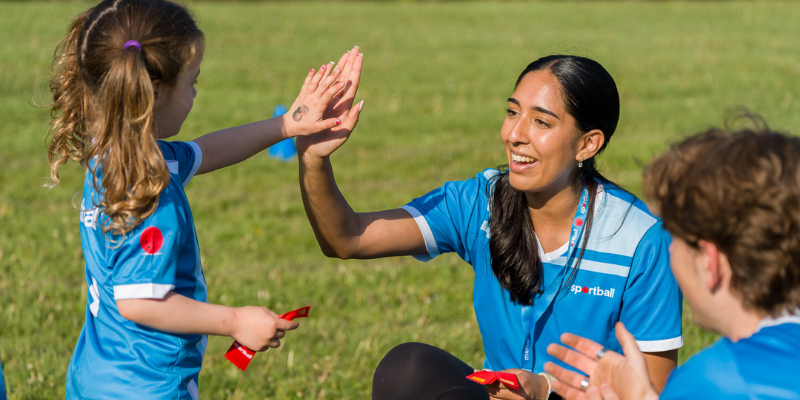
A good coach for young kids is trained in childhood development. Look for patience, positivity, and the ability to keep kids engaged through playful instruction.
A key question for the provider is whether their coaches are trained specifically in early childhood development. Understanding how a child learns is just as important as knowing what to teach them.
Class structure and environment
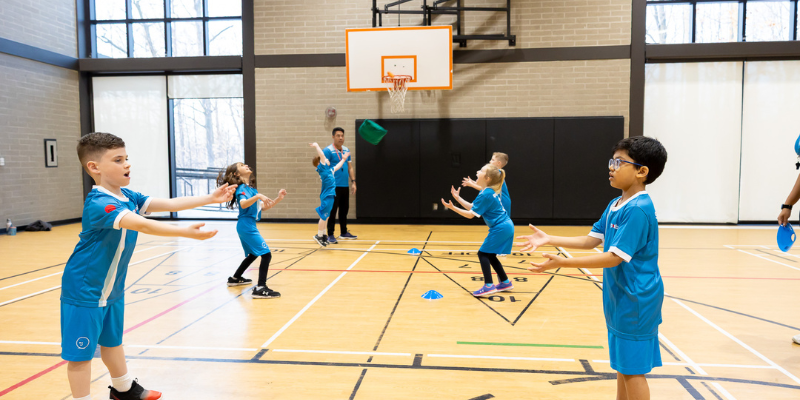
Look for small class sizes, high activity levels where kids spend less time standing around, and age-appropriate equipment.
Sportball’s multi-sport approach is designed to keep kids engaged and prevent boredom while building a wide range of skills. When classes are active and imaginative, children forget they are learning and just focus on the joy of playing. You can find a Sportball program near you to see this approach in action.
Common parent mistakes to avoid
Common parent mistakes in youth sports include specializing too early, focusing on the scoreboard, coaching from the sidelines, and ignoring a child’s actual interest level.
Pushing for a single sport early
Specializing in one sport before adolescence carries significant risks, including burnout, overuse injuries, and underdeveloped overall athleticism. National development frameworks emphasize that the early stages should focus on inclusive, multi-sport, developmentally appropriate activity to build a well-rounded athlete.
Focusing on winning over effort
It is natural to want to see your child succeed, but defining success by the final score creates unnecessary pressure. Emphasize the importance of praising hard work, good sportsmanship, and the courage to try new skills.
Coaching from the sidelines
Shouting instructions during a game undermines the coach and puts undue pressure on the child. The parent’s role is to be a supportive fan. Let the coach handle the instruction, and focus your energy on cheering for everyone’s effort.
Ignoring the child’s interest level
A child’s motivation must be internal for them to truly benefit from an activity. Forcing a sport they dislike is the fastest way to ensure they quit altogether. Follow their curiosity and let their joy be your guide.
Frequently asked questions
Frequently asked questions about sports readiness often cover topics like physical literacy, handling a child’s desire to quit, and balancing structured classes with free play.
What is physical literacy and why does it matter?
Physical literacy matters because it is the confidence, competence, and motivation to be active for life. It serves as the foundation for all physical activities. When children develop fundamental movement skills early, they build the confidence needed to participate in sports and active play as they grow.
When is it okay to let my child specialize in one sport?
It is okay to let your child specialize in one sport when they reach early adolescence, typically around 13 to 15 years old. This delay allows for full physical and psychological development. Waiting also gives children the necessary time to build a broad base of athletic skills before focusing on a single activity.
What is better for a toddler: structured classes or free play?
Both are incredibly important. Free play is essential for fostering creativity and independence. Meanwhile, a well-designed, developmentally appropriate class introduces structure, social skills, and purposeful fundamental movements in a supportive setting.
Conclusion
True sports readiness is a blend of physical, social, and emotional skills. For young children, the focus should always remain on fun and fundamental skill development, not competition. Your role as a parent is to provide encouragement, praise effort, and find a program that perfectly fits your child’s current developmental stage.
The next time your child is at the playground, observe them at play with these readiness signs in mind. Are they taking turns? Are they exploring new movements with confidence?
When you are ready to take the next step, consider a program like Sportball. Our methodology is built around the principles of physical literacy and play-based learning, ensuring your child’s first sports experience is positive, confidence-building, and fun. Book a class near you to spark their lifelong love of movement.