At a glance:
- For young children, how a sport is played matters as much as which sport it is: flag football, floor hockey and t-ball remove most of the collision risk.
- Play-based classes are the safest start.
- Playing several sports, with regular rest, helps prevent overuse injuries in growing bodies.
- Ask any program about coach training, first aid, concussion policy and how rules are adapted for young players.
You want your child to start sports and you also want them to stay injury free. This guide helps you weigh both: which sports carry the most risk, what’s right at each age, and the questions that tell you whether a program takes safety seriously.
What makes a sport safer or riskier?
A sport’s injury risk comes mainly from how much contact it involves, how fast it’s played and how well it’s adapted and supervised for the age group. Let’s break it down:
| Risk factor | Lower risk | Higher risk |
|---|---|---|
| Contact | No contact (swimming, tennis, golf) | Intentional collisions (tackle football, bodychecking in hockey) |
| Speed and surface | Moderate pace on soft or even ground | High speed, hard surfaces, ice or heights |
| Equipment | Sized for the child, well fitted | Adult-sized, poorly fitted or missing |
| Supervision and rules | Trained coaches, rules adapted for age | Few adults, adult rules, volunteer coaches |
Which sports are safest?
This is a general guide rather than a precise ranking: within any sport, the level of competition, the rules and the quality of coaching make a big difference.
Lower risk: non-contact sports
Swimming, tennis, golf, dance, and track and field involve no intentional contact between players, so serious injuries are uncommon. The main risks are overuse injuries, like a sore shoulder in swimming or elbow in tennis, when children train the same movements too often.
Moderate risk: limited contact or falls
Baseball and softball, volleyball, gymnastics, recreational soccer and flag football carry more risk of sprains, strains and falls, but collisions are occasional rather than part of the game. Well-run programs lower the risk further with rules adapted for young players, like no head-first sliding in baseball.
Higher risk: collision sports
Tackle football, ice hockey with bodychecking, lacrosse and competitive cheerleading have higher rates of injuries, including concussions and fractures, because of collisions, speed or heights. That doesn’t mean children should never play them. It means age-appropriate rules, well-fitted protective equipment and excellent coaching are essential, and many families wait until children are older and ready for the demands of the game.
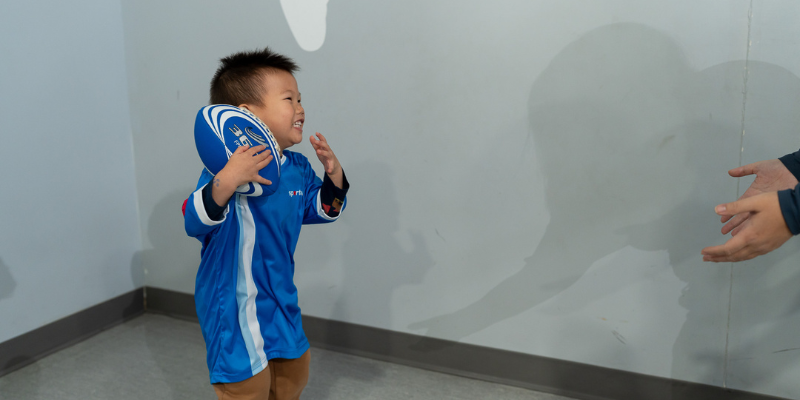
Did you know: some sports programs, like Sportball, include football into their programs but remove the contact elements. Instead, they focus on the skill fundamentals.
Same sport, safer version
For young children, you often don’t have to choose between a sport they love and a safer one. Many sports have a modified version that keeps the skills and the fun while removing most of the collision risk.
| Sport | Higher-risk version | Safer version for young kids |
|---|---|---|
| Football | Tackle football | Flag football or non-contact football classes focused on throwing, catching and kicking |
| Hockey | Ice hockey with bodychecking | Ball or floor hockey, with no ice or skates needed |
| Baseball | Hard ball, pitched at speed | T-ball with larger bats, balls and tees sized for small hands |
| Soccer | Competitive, full-sided games | Small-sided, skill-based play with no heading for young players |
A JAMA Pediatrics guide for parents on organized sports points to exactly these kinds of changes, such as no head-first sliding in baseball and no bodychecking in hockey for younger players, because young children are at higher risk of injury under adult rules.
Safest sports by age
The safest sport for your child is the one that matches their coordination, attention span and emotional maturity. Mayo Clinic’s guidance on which sports suit each age is a helpful starting point.
Toddlers and preschoolers (ages 2 to 5)
Most children this age are too young for competitive sports. They’re still developing balance and coordination, and they aren’t ready for complex rules. The safest and most useful activities build fundamental movement skills: running, jumping, throwing, catching, kicking and swimming lessons, along with plenty of unstructured free play.
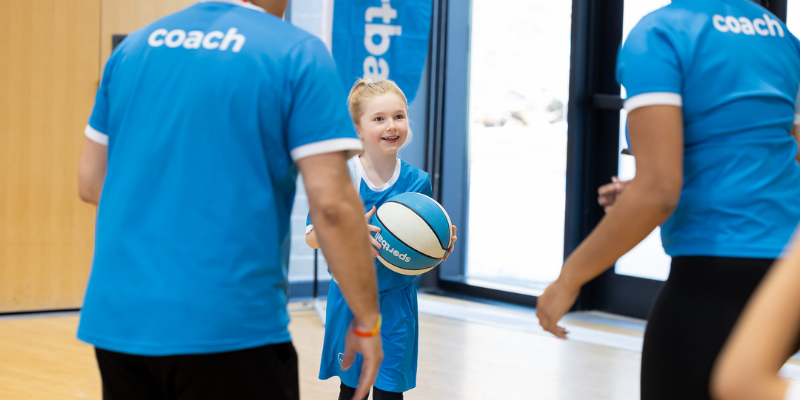
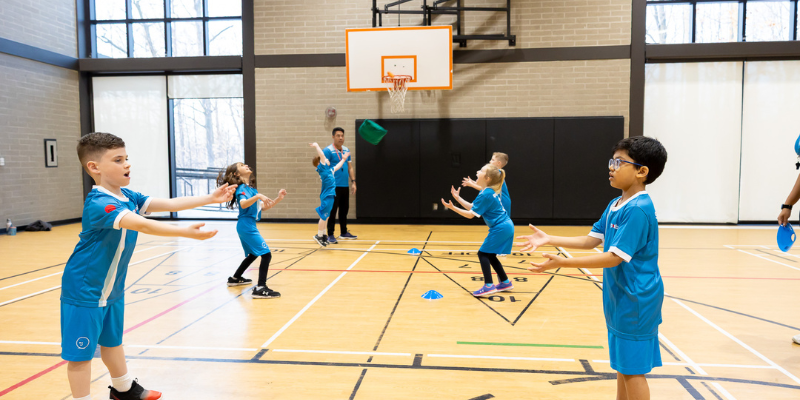
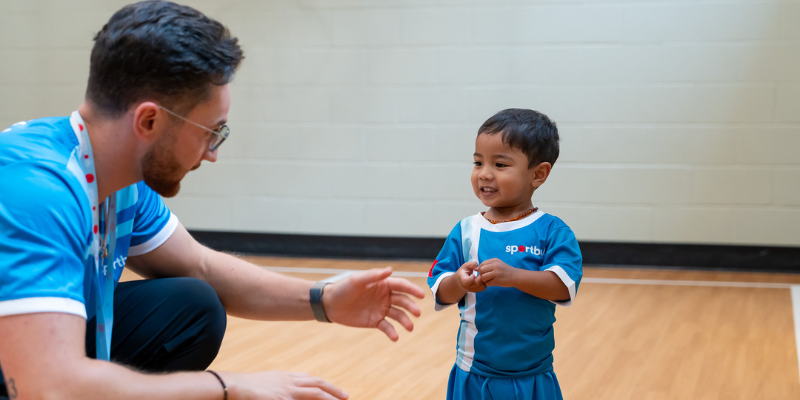
A structured class can still be a great fit if it’s play-based rather than competitive. At Sportball, a toddler might “launch a rocket” with a soft kick or tiptoe past a “sleeping dinosaur”, practising the same movements they’ll later use in soccer or basketball, with no scoreboards and no collisions. Our guide on when kids should start sports explains what to look for at each stage. Multi-sport programs are truly the best fit.
Early school age (ages 6 to 9)
Around age 6, most children have the attention span, vision and coordination for organized activities with simple rules. T-ball, soccer, gymnastics, tennis, swimming and martial arts are all good options. Look for modified rules, equal playing time and an emphasis on learning over winning. Flag football is a good way to enjoy football without tackling.
Older children (ages 10 to 12)
By 10 to 12, many children are ready for faster, more complex sports like basketball, volleyball and hockey. Growth spurts can make them temporarily clumsier, and a new risk becomes more common: overuse injuries. Children’s bones grow faster than their muscles, and their growth plates are weaker than nearby tendons and ligaments, so repeating the same movements too often can cause lasting problems. Keep multi-sport in the mix to mitigate injuries, and to help keep sports fun!
How to make any sport safer
You can lower the risk in almost any sport by choosing the right program, keeping training varied and making sure equipment fits.
Play more than one sport
Specializing in one sport too early is one of the biggest risk factors for overuse injury and burnout. The American Academy of Pediatrics recommends that children take at least one to two days off a week and two to three months off a specific sport each year, and that weekly hours in organized sport shouldn’t exceed their age in years. In Canada, the Sport for Life Long-Term Development framework similarly recommends sampling many sports.
Encouraging your child to sample multiple sports spreads the load across different muscles and joints and builds a wider range of skills. Read more about the risks of early specialization.
Get the equipment right
A properly fitted helmet protects better than an expensive one that’s too loose. Choose certified equipment sized for your child, check it each season and replace anything damaged. For hockey helmets, look for CSA certification in Canada (HECC in the US).
Some programs, like Sportball, provide all equipment so you don’t have to worry about the hassle.
Ask the program the right questions
Before you register, ask:
- Are coaches trained in first aid and CPR, and are they background checked?
- What’s your concussion policy, and who decides when a child can return to play?
- How are rules and equipment adapted for my child’s age?
- What is the coach-to-child ratio?
- How do coaches handle rough play or a child who gets upset?
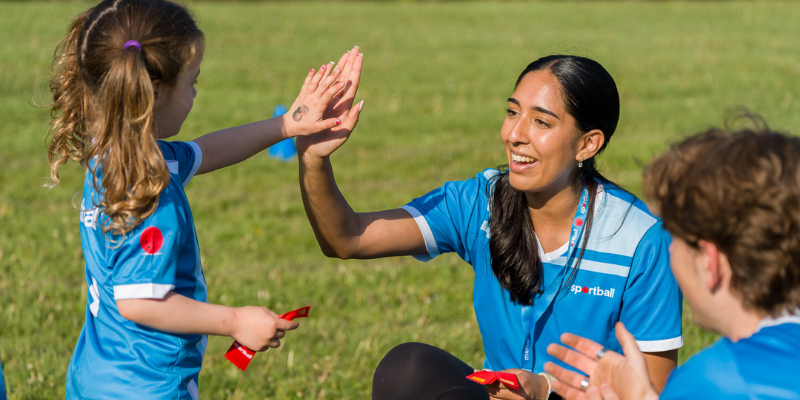
At Sportball, every coach has First Aid/CPR training and a background check. For more questions to ask, see our list of 10 questions every parent should ask before signing up for sports.
What parents should know about concussions
A concussion is a brain injury that can’t be seen on X-rays or scans, and it can be caused by any blow to the head, face or neck, or a hit to the body that jars the head. It can happen in any sport, not just contact sports.
Watch for headaches, dizziness, confusion, nausea, sensitivity to light or changes in mood or behaviour after a fall or knock. If you suspect a concussion, remove your child from play right away and don’t let them return that day. Follow a doctor’s advice before they go back to sport. Parachute has Canadian concussion guidance for parents, and families in the US can find similar resources through the CDC’s HEADS UP program.
Frequently asked questions
Which youth sport has the highest injury rate?
Collision sports such as tackle football and ice hockey with bodychecking generally have the highest injury rates in youth sports, including concussions. Rules that remove tackling and bodychecking for younger age groups, good coaching and well-fitted equipment all help lower the risk.
What is the easiest sport for young kids to start with?
Soccer and swimming are two of the easiest sports for young children to start with, because they need little equipment and build basic skills like running, kicking and balance. For toddlers and preschoolers, a multi-sport class is an easy way to try several sports and see what they enjoy most.
Is football safe for toddlers?
Tackle football isn’t appropriate for toddlers, but non-contact football can be. Classes that focus on throwing, catching and kicking, without tackling, let young children learn the basics safely. Flag football is a good next step for school-age kids.
Is soccer safer than football?
Recreational soccer is generally lower risk than tackle football, because collisions aren’t a planned part of the game. Soccer still has falls, sprains and occasional head knocks, so look for small-sided games and no heading for young players. Flag football is a lower-risk alternative to tackle football.
How do I know if my child is ready for a contact sport?
Your child may be ready for a contact sport when they have good coordination, can follow complex rules and can handle physical play without getting overly upset. Talk to your child’s doctor, check the league’s rules for their age group and make sure coaches teach safe technique from the start.
Start with safe and positive movement
The safest sport for your child is one that matches their age and stage, is played in an adapted format and is led by trained coaches who put fun and development ahead of winning. Mix up the sports they play, build in rest, and don’t be afraid to ask programs about safety.
For children from 16 months to 12 years, a non-competitive, multi-sport program is a gentle, low-risk way to build skills and confidence across many sports. When you’re ready, you can find a Sportball class near you.